KILLORAN
Killoran is an Irish surname with a rich historical and linguistic heritage rooted in the Gaelic traditions of the British Isles.
The name is traditionally believed to derive from the Gaelic patronymic Ó Cill Oirain, meaning “descendant of Cill Oirain.” In this construction, cill denotes a church and oir translates as gold, thus the surname may be interpreted as “descendant of the church of gold.”
Alternative etymological explanations point to the Gaelic element coill, meaning wood or forest, combined with the common prefix Ó indicating lineage. This form, seen in the ancient name O’Coillghobhair, connects the surname to a forest dweller and suggests an origin in the province of Connacht where such topographical surnames were common.
Historical records also associate Killoran with the earlier form Mac giolla Luaithrinn, “son of the follower of St Luiagh.” St Luiagh was a 7th‑century holy man who later gained sainthood. In this tradition the name reflects veneration of a saintly patron, a feature shared by many Irish surnames that began with “Kill” or “Gil” in earlier times.
A 1659 census of Ireland lists members of the clan, then called Gillelorin, as prominent in the barony of Gorren in County Sligo. Subsequent migration during the Potato Famine saw individuals such as Patrick Kiloran, aged twenty‑five, leave Sligo aboard the ship Henry Clay of Liverpool for New York in 1846.
In terms of geographic distribution, the surname is most common in the western province of Connacht, especially in County Mayo and County Galway, but it also occurs in Leinster (particularly in County Laois and County Offaly) and in Northern Ireland (notably in County Antrim and County Tyrone). Outside Ireland, small communities bearing the name can be found in Britain, the United States, Canada, Australia, New Zealand, and Scotland.
Several spelling variations exist that reflect regional pronunciation and historical orthography. These include Killoran, Kelloran, Kalloran, Kiloran, Kerelan, Kerrigan, and the Gaelic forms Ó Cill Ruaidhrí and Ó Cill Riabhaigh. Each retains the same leading element cill but differs in suffix or inflection.
Despite these variations, all forms trace back to a common Irish lineage that was associated with Christian worship, Celtic cultural heritage, and a strong regional identity within the Gaelic-speaking communities of medieval Ireland.
Typical given names associated with the Killoran surname
Male
- Aidan
- Andrew
- Craig
- David
- James
- John
- Michael
- Patrick
- Paul
- Philip
- Robert
- Sean
- Thomas
Female
- Angela
- Ann
- Anna
- Elizabeth
- Emma
- Larisa
- Lisa
- Margaret
- Maria
- Mary
- Patricia
- Rebecca
- Susan
- Tracy
Similar and related surnames
- Kileran
- Killarn
- Kelloran
- Callaran
- Calleran
- Calron
- Claren
- Clarin
- Clarn
- Clarne
- Claron
- Clearn
- Cloran
- Coleraine
- Coleran
- Colerin
- Colerine
- Colern
- Collaran
- Colleran
- Collerin
- Collern
- Collourne
- Collran
- Coloran
- Colrain
- Colraine
- Colrein
- Colrin
- Cullearn
- Cullern
- Cullerne
- Culrain
- Galeran
- Gallerani
- Glerean
- Kellorn
- Kilara
- Kileryne
- Killan
- Killar
- Killarney
- Killearn
- Killeran
- Killerman
- Killern
- Killoren
- Killorn
- Kiloran
- Kilrain
- Kilraine
- Kilrane
- Klarin
- Kleiren
- Klern
- Kolarin
- Kolirin
Related and similar names are generated algorithmically based on the spelling, and may not necessarily share an etymology.
How to communicate the surname Killoran in...
Braille
⠅⠊⠇⠇⠕⠗⠁⠝
Morse
-.-...-...-..---.-..--.
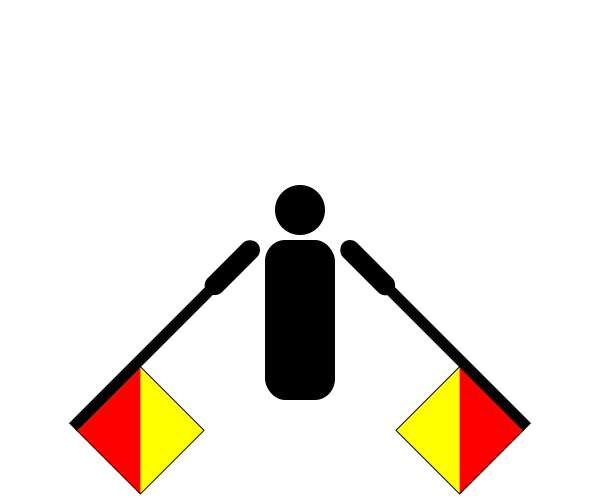
Semaphore
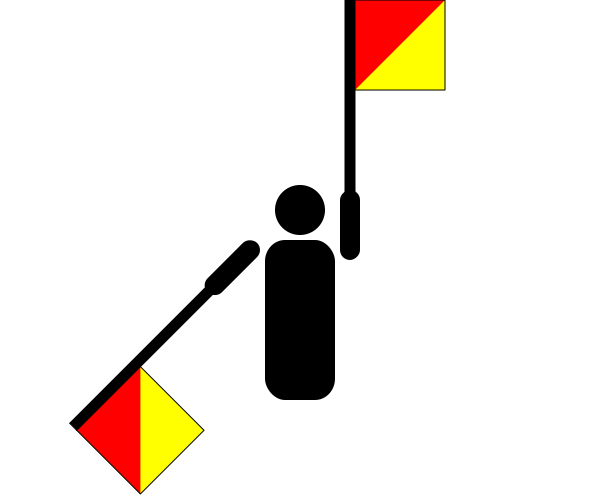
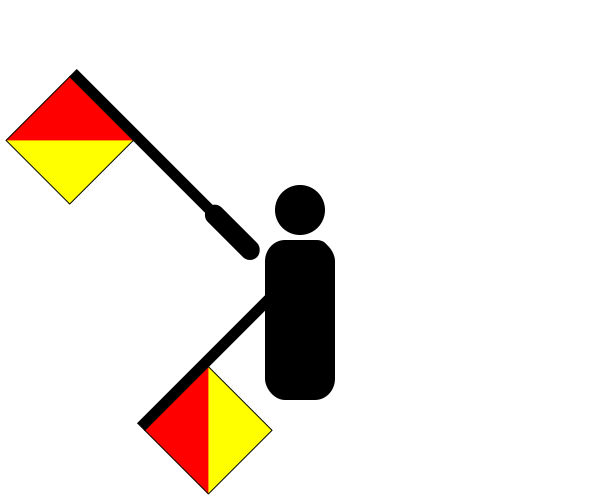

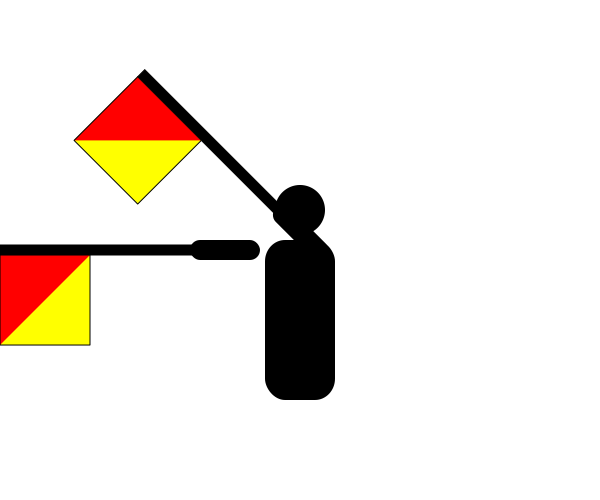
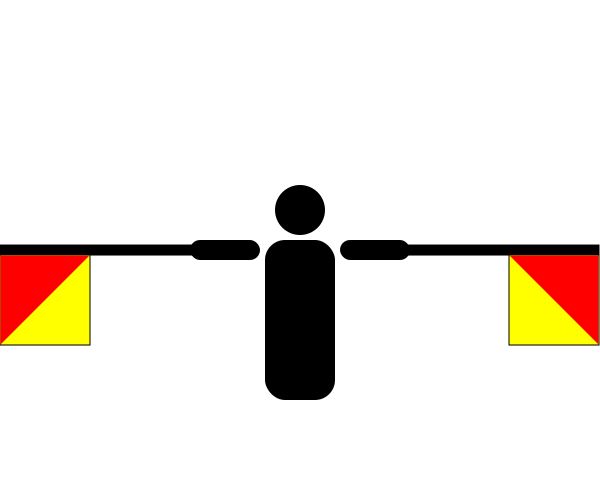

There are approximately 398 people named Killoran in the UK. That makes it one of Britain's least common surnames. Only around six in a million people in Britain are named Killoran.
Surname type: From name of parent
Origin: Celtic
Region of origin: British Isles
Country of origin: Ireland
Religion of origin: Christian
Language of origin: Gaelic
