KILBRIDE
Recorded variant spellings include Kil Bride
Kilbride is a surname of Gaelic origin, with roots in the Irish language and a significant presence in the British Isles. The name derives from the Irish Gaelic phrase Cill Bhríde, which translates into English as “church of St. Brigid.” The designation is locational, indicating that those who bore the name traditionally lived near or were otherwise associated with a church dedicated to St Brigid.
In Ireland, the surname is particularly common in County Wicklow, where the village of Kilbride provides a clear example of the geographical link implied by the name. Additional concentrations can be found across the island, including in Ulster, Connacht and Leinster, where records of families bearing the name are recorded in parish registers and census documents.
Across the sea, Kilbride is also recognised as a Scottish locational surname. It most probably originates from the town now called East Kilbride in the Middle Ward of Lanarkshire. A minority of bearers are believed to have connections to the settlement of West Kilbride in Ayrshire. Both town names are derived from the pre-10th century Gaelic term Giolla Bhrighde, meaning a follower of St Brigid.
Documents from the early medieval period provide evidence of the surname in Scotland. A witness named John de Kilbrid is recorded in a charter of the bishop of Glasgow in 1202. The name also appears in the 1277 register of the procurator court as Reginald de Kelbride, and in 1296 a Gilbert de Kilbride is noted as rendering homage to the Scottish Crown.
The name is also found in forms such as MacKilbride and MacBride; these are patronymics that share the same origin as the locational surname but are technically distinct in their construction. Each variation reflects the evolution of the name in distinct dialects and regions.
In the United Kingdom, the surname is most frequent in Scotland, where it is recorded in the Highlands, including the historic regions of Argyll, Inverness and Sutherland. In Ireland contemporary surname registers still indicate the largest concentrations in counties Carlow, Cork, Dublin and Kerry.
Beyond the British Isles, the Kilbride name has spread through emigration. In North America it is present in United States and Canada, while in South America it appears mainly in Argentina and Brazil. Earlier records also show the surname in continental Europe, including England, Wales, Northern Ireland, the Netherlands, Germany, France and Spain. The diaspora continues in Australia and New Zealand, where descendants retain the surname in parish and civil documentation.
Genealogical accounts regard Kilbride as one of the most popular surnames throughout Ireland and give the family an emblem that features a green knight mounted on a white horse, holding a white shield emblazoned with the shamrock. In Scotland the crest is described as a silver pin bearing a black mullet, a motif tied to the Clan MacGillebride of centre-west Scotland and historically linked to the kingdom of Fife.
The name remains widely used today, both within Ireland and Scotland and in the wider diaspora. It is officially recorded in civil registration databases, electoral rolls and contemporary telephone directories, reflecting a continuous lineage that stretches back many centuries.
Typical given names associated with the Kilbride surname
Male
- Andrew
- Christopher
- Daniel
- David
- James
- John
- Mark
- Michael
- Patrick
- Paul
- Peter
Female
- Amy
- Deborah
- Helen
- Julie
- Laura
- Linda
- Margaret
- Mary
- Nicola
- Patricia
- Paula
- Sarah
- Susan
Similar and related surnames
Related and similar names are generated algorithmically based on the spelling, and may not necessarily share an etymology.
How to communicate the surname Kilbride in...
Braille
⠅⠊⠇⠃⠗⠊⠙⠑
Morse
-.-...-..-....-...-...
Semaphore
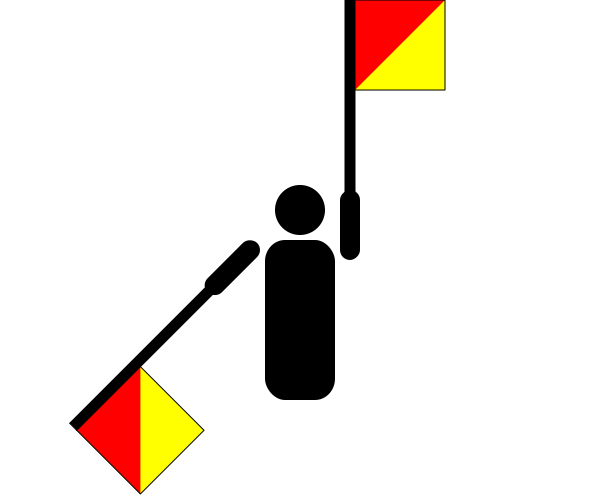
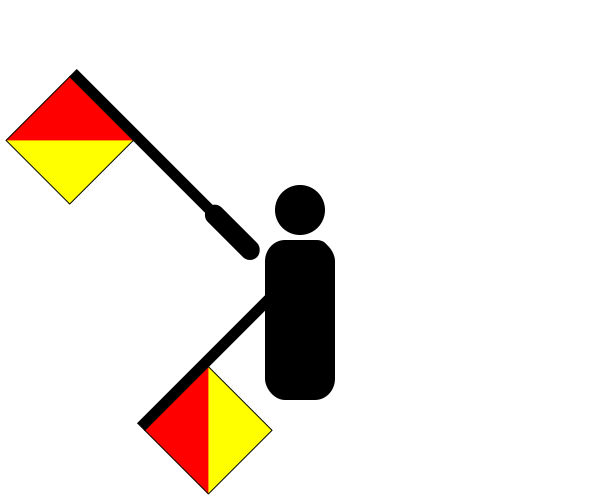

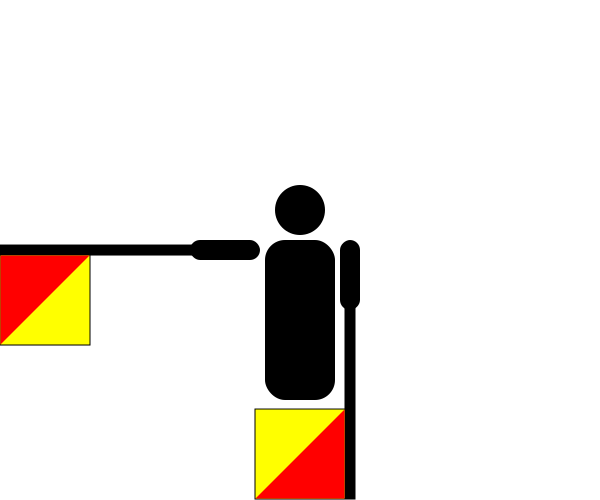
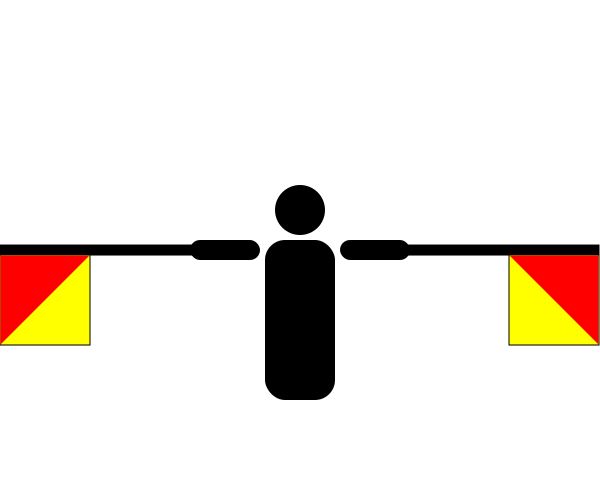


There are approximately 956 people named Kilbride in the UK. That makes it roughly the 7,622nd most common surname in Britain. Around 15 in a million people in Britain are named Kilbride.
Surname type: From name of parent
Origin: Celtic
Region of origin: British Isles
Country of origin: Ireland
Religion of origin: Christian
Language of origin: Gaelic
