KENTON
The surname Kenton is firmly rooted in England, arising from both personal and locational influences in the Old English period. It is traditionally classified as a *type* of geographical surname, linked to specific places within the British Isles.
One derivation of the name traces back to the Old English personal names Cynefrið and Cynemær. The former translates as “royal peace” while the latter conveys “royal famous.” These meanings echo the concepts of regal authority, tranquility, and renown, attributes that early bearers of the surname may have sought to associate with their lineage.
Alternatively, Kenton is a locational surname, extracted from village names that appear throughout England. The place-name formation stems from the Old English elements cēne, meaning “bold” or “brave,” and tūn, meaning “enclosure” or “settlement.” Thus, Kenton can signify a “settlement of the brave” or, more generally, a community distinguished by strength and resilience.
Another significant interpretation involves the Old English compound cyne‑tun, literally “the King's farm.” This form is shared with related locational names such as Kington and Kingston, illustrating an original feudal association with royal estates. In contemporary usage, the name has been understood to mean “the tenant of the King's farm,” a designation often given when an individual moved from one estate to another under royal patronage.
The earliest documentary record of the surname appears in the Domesday Book of 1066, where it is listed as Kynetone in the county of Devon. This entry places the name among the surviving place-names of the Norman survey, confirming the antiquity of the Kenton settlement.
Further evidence of the name’s prominence comes from the Kenstons of Kenton in Suffolk, who were recorded as possessing a distinctive coat of arms: a black shield charged with two bars and three gold cinquefoils. The first explicit spelling of the family surname appears in the Pipe Rolls of Norfolk, dated 1273, under the name Stephen de Kyngton. These records fall within the reign of King Edward I, who ruled from 1272 to 1307, a period when the English administrative system often documented landholdings and tenants in great detail.
In sum, the surname Kenton encapsulates a multi‑faceted heritage, intertwining royal associations, martial attributes, and locational identity. Its persistence from the Domesday era to the medieval parish registers underscores a lineage that, while modest in historical records, offers a window into the linguistic and social fabric of early England.
Typical given names associated with the Kenton surname
Male
- Andrew
- Brian
- David
- Gary
- John
- Jonathan
- Mark
- Michael
- Nicholas
- Paul
- Stephen
Female
- Carol
- Catherine
- Christine
- Denise
- Elizabeth
- Emma
- Jennifer
- Karen
- Louise
- Margaret
- Natalie
- Pauline
- Ruth
- Susan
Similar and related surnames
- Canton
- Cantons
- Kanton
- Canadine
- Candan
- Canden
- Candian
- Candiani
- Candiano
- Candin
- Candon
- Cannadine
- Cantan
- Cantiani
- Cantin
- Cantini
- Cantone
- Cantoni
- Conadine
- Condan
- Conden
- Condin
- Condina
- Condino
- Condon
- Condonne
- Condun
- Coniton
- Contan
- Conten
- Contin
- Contini
- Contino
- Conton
- Counden
- Coundon
- Cownden
- Cunden
- Cundon
- Cunton
- Gainton
- Ganaden
- Ganden
- Gandin
- Gandine
- Gandini
- Gandion
- Gandon
- Gandonu
- Gantan
- Ganton
- Ghanadian
- Goinden
- Gondon
- Gondouin
- Gonton
- Gounden
- Guindon
- Guintini
- Guinton
- Gunaydin
- Gundan
- Gundin
- Gundona
- Gunten
- Guntin
- Gunton
- Kandan
- Kanteen
- Kanto
- Kantounas
- Kanutin
- Kenden
- Kendon
- Kenon
- Kent
- Kenten
- Kentenus
- Kentin
- Kentleton
- Kentmen
- Keynton
- Kinden
- Kindin
- Kindon
- Kineton
- Kinghton
- Kiniaton
- Kinneton
- Kinton
- Kondan
- Kondon
- Konten
- Kundan
- Quaintann
- Quainton
- Quantin
- Quanton
- Quentin
- Quenton
- Quintaine
- Quintan
- Quintana
- Quintano
- Quinten
- Quintian
- Quintin
- Quintini
- Quintino
- Quinton
- Quintyn
- Quintyne
- Qunton
Related and similar names are generated algorithmically based on the spelling, and may not necessarily share an etymology.
How to communicate the surname Kenton in...
Braille
⠅⠑⠝⠞⠕⠝
Morse
-.-.-.-----.
Semaphore
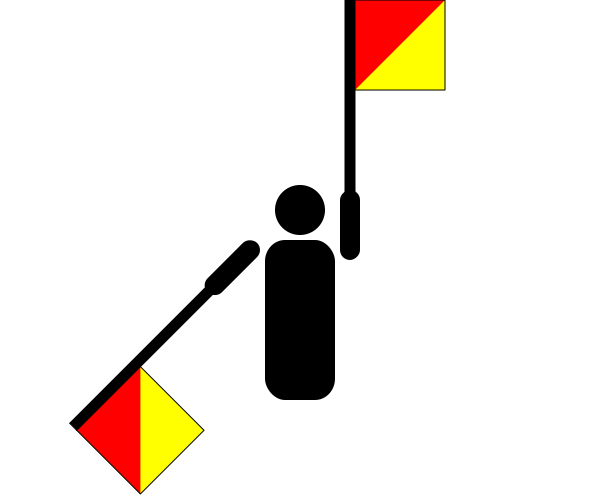

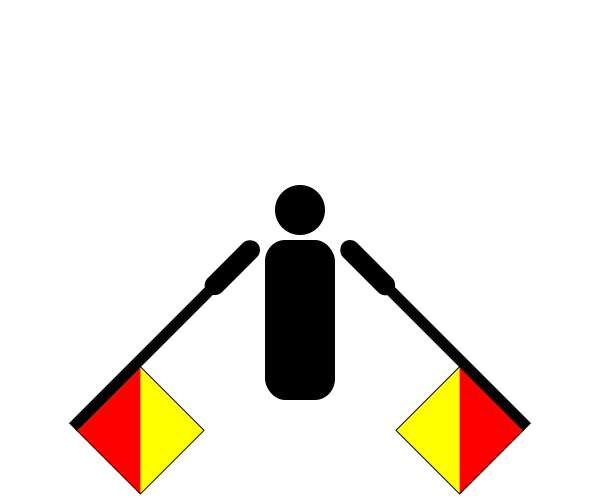
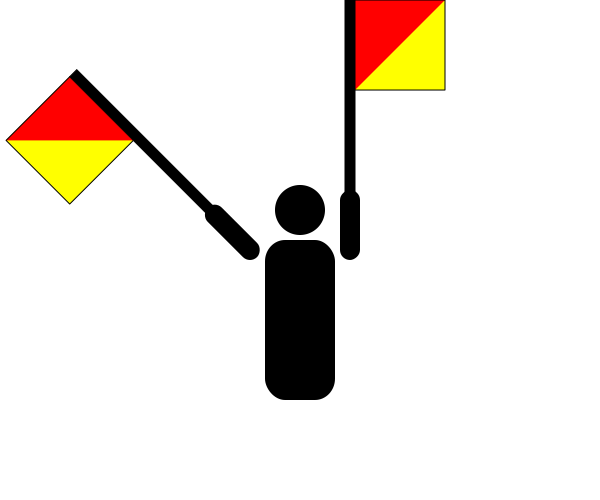
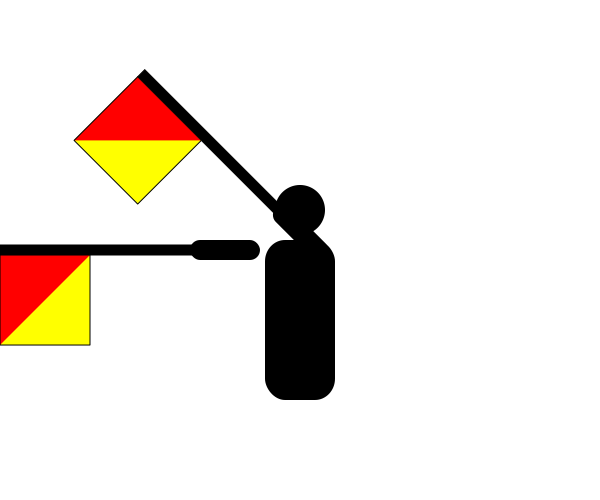
There are approximately 937 people named Kenton in the UK. That makes it roughly the 7,746th most common surname in Britain. Around 14 in a million people in Britain are named Kenton.
Surname type: Location or geographical feature
Origin: English
Region of origin: British Isles
Country of origin: England
Religion of origin: Christian
Language of origin: English

Famous people named Kenton
- Darren Kenton - Football player
Names and descriptions courtesy of Wikipedia, and may contain errors. This is not intended to be an exhaustive list of every famous person with this name.