GILLANDERS
Gillanders is a surname of Scottish origin, derived from the personal name Gille Aindrais, which translates into English as “servant of St Andrew”. The name is patronymic in nature, having originally been employed to denote the descendants of an individual bearing the forename Gillanders.
The Gaelic construction of the surname is Mac Giolla Aindreis, where mac means “son of”, giolla means “servant of”, and Aindreis is the personal name Andrew. The Greek root Andreas means “manly”, and Andrew is the name by which the first of Jesus Christ’s disciples is known. As the patron saint of Scotland, Andrew’s legacy is reflected in the early Scottish onomastic tradition. A legend relates that Andrew’s relics were brought to Scotland by St Regulus in the fourth century.
Documentary evidence places the first recorded use of the surname in the latter half of the twelfth century. The earliest surviving spelling, dated to 1190, appears in the Records of Edinburgh as Gilleasald Mac Gilleandris. Subsequent references include a juror named Dungal Mac Gilendres at an inquest held at Gerwan in 1260, and the christening of William, son of Alexander and Margaret Gillanders, at St Cuthbert’s, Edinburgh, on 7 November 1708. Marriage records such as that of Joseph Gillanders and Susanna Mason in Westminster in 1756 further attest to the surname’s endurance.
The name is closely associated with the ancient Clan MacGillanders, which in the twelvth century settled in the region of Kintyre and later became linked with the port town of Carradale in Argyllshire. Members of the clan were prominent traders of herrings and other fish, undertaking commerce throughout Scotland and parts of Europe. They also held Castle Ha on the Kintyre peninsula, a stronghold that reinforced their role as wardens of the surrounding coasts. The Clan Gillanders was one of several tribes that formed the Clan Chattan coalition, alongside clans such as the Macleans and the Frasers.
In contemporary times the surname is mainly found in south‑west Scotland, with higher concentrations in Ayr, Girvan, Inveraray and the greater Glasgow area. It remains a common name among Scottish‑descended families in England, northern Ireland, Canada and Australia. The surname is still carried by many who trace their lineage back to the original Gillanders clan.
Numerous orthographic variants of the name exist, reflecting historical changes in spelling and regional pronunciation. Accepted variants include MacGillanders, McElhlanders, Macillesland, Maclelhlend and MacGillend. Spelling differences such as Gillanderson, Gillandersson and Gillanderses also occur, often resulting from dialectal influences or the transcription practices of record‑keepers.
The persistence of the name Gillanders in modern records confirms its longstanding heritage and the continued reverence for the tradition of serving St Andrew throughout Scottish history.
Typical given names associated with the Gillanders surname
Male
- Andrew
- David
- Douglas
- George
- Ian
- James
- John
- Neil
- Norman
- Richard
- Robert
- Ross
- William
Female
- Anne
- Elizabeth
- Emma
- Helen
- Julie
- Kathleen
- Louise
- Margaret
- Mary
- Sarah
- Susan
Similar and related surnames
Related and similar names are generated algorithmically based on the spelling, and may not necessarily share an etymology.
How to communicate the surname Gillanders in...
Braille
⠛⠊⠇⠇⠁⠝⠙⠑⠗⠎
Morse
--....-...-...--.-....-....
Semaphore

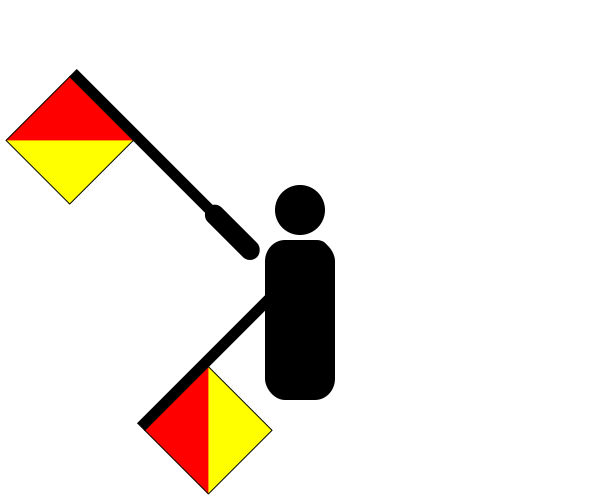


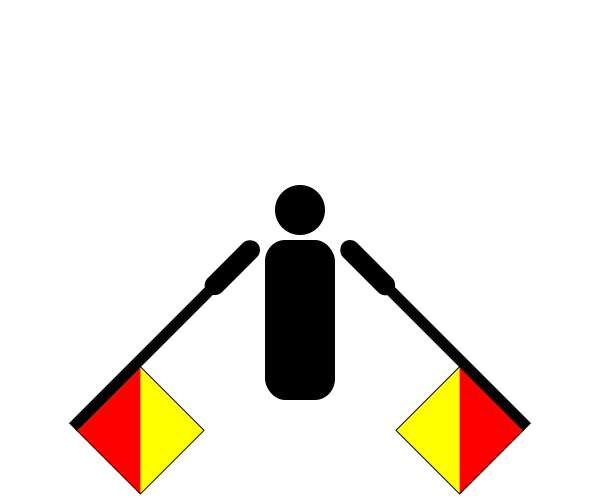


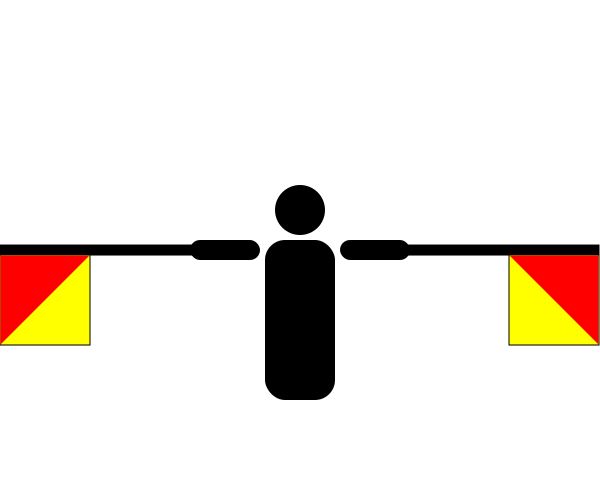

There are approximately 615 people named Gillanders in the UK. That makes it one of Britain's least common surnames. Only around nine in a million people in Britain are named Gillanders.