FRITZ
Fritz is a surname of German origin, derived from the personal name Friedrich, which translates as “peaceful ruler” or “peaceful king.” The name has long served as the diminutive or pet form of Friedrich and was traditionally employed as a patronymic surname, indicating descent from a forebear named Fritz or Friedrich.
In the German‑speaking world the surname appears in a variety of spellings, including Frisch, Fritsch, Fritsche, and Fritske. Diminutives such as Fritschel and Fritschli also exist, as do occupational derivatives like Frischmann, Fritschmann, and Fritzemann. Patronymic variants include Fritzer and Fritzinger. The surname is particularly common in Germany, Austria, and Switzerland.
Among English‑speaking readers Fritz is often recognised as the quintessential German name. Its popularisation can be traced to the widespread use of the personal name Frederick in medieval Europe. The Latinised form Fridericus meant “peace‑power” and enjoyed considerable esteem, in part owing to St. Frederick, a ninth‑century bishop of Utrecht whose cult fostered devotion to the name.
During the Middle Ages the surname also became associated with the Hohenstaufen dynasty, a royal family that exercised rule over vast parts of Europe for many centuries. Consequently, Fritz was a hereditary name borne by numerous members of that house.
In the First World War, the word Fritz was co-opted as a derogatory epithet applied to all Germans. Historical accounts attribute the creation of this usage to the propaganda department of the British War Office. The term thus acquired a distinctly negative connotation during that period.
The surname records are some of the earliest seen in German archives. For example, a Latinised entry for Frischinus de Tottichoven indicates that this individual, the Burgmann of Freiburg, was documented in the year 1281. Another early reference is to Pieter Friczche, recorded in the charters of Dresden in 1391. These examples attest to the long-standing presence of the surname in official documents.
In sum, Fritz is a patronymic surname with deep roots in German culture, reflective of a broader tradition of naming derived from the personal name Friedrich. Its historical associations—from medieval ecclesiastical influence to dynastic identity, and its later wartime notoriety—illustrate the multifaceted nature of surnames that have traversed centuries and geopolitical boundaries.
Typical given names associated with the Fritz surname
Male
- Brendan
- Christopher
- David
- James
- Jonathan
- Jurgen
- Kevin
- Mark
- Nicholas
- Paul
- Robin
- Stephen
- Thomas
Female
- Anita
- Anna
- Christina
- Christine
- Claudia
- Dora
- Jennifer
- Karin
- Kim
- Louise
- Renate
- Samantha
- Susan
- Sylvia
Similar and related surnames
Related and similar names are generated algorithmically based on the spelling, and may not necessarily share an etymology.
How to communicate the surname Fritz in...
Braille
⠋⠗⠊⠞⠵
Morse
..-..-...---..
Semaphore
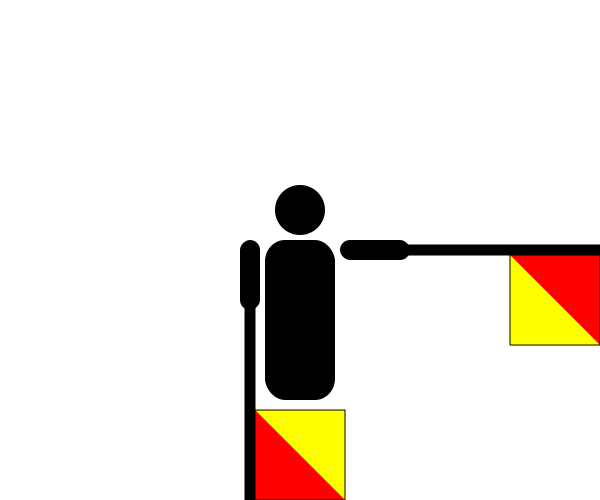
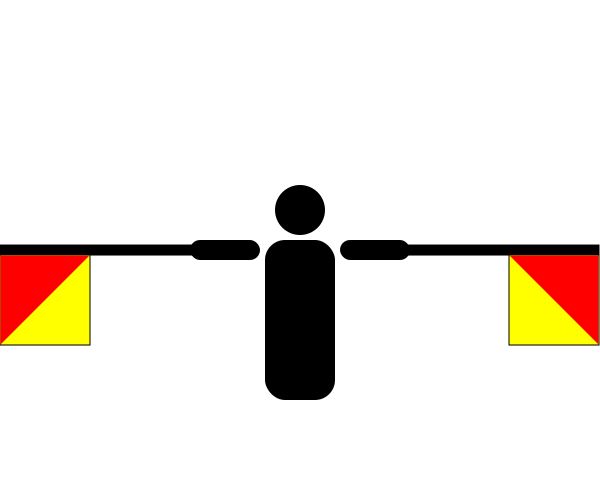
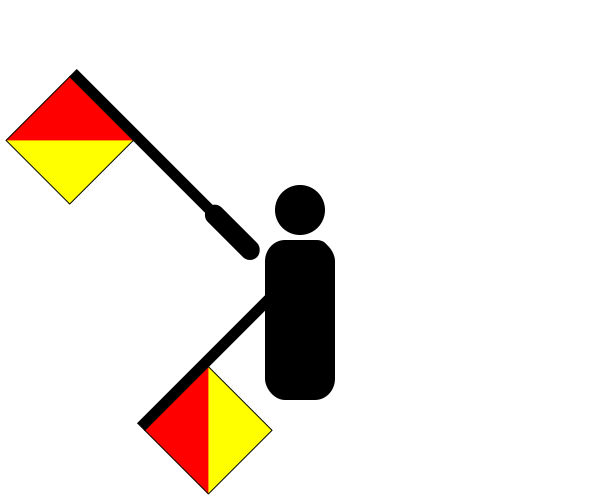
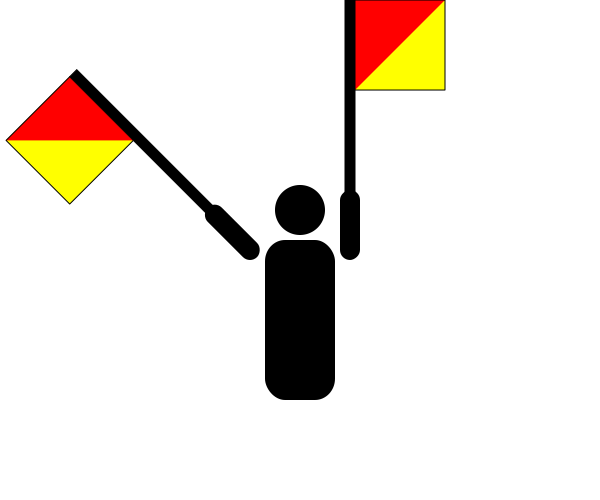

There are approximately 356 people named Fritz in the UK. That makes it one of Britain's least common surnames. Only around five in a million people in Britain are named Fritz.
Region of origin: Europe
Country of origin: Germany
Language of origin: German