FRANCISCO
Origins of the surname Francisco lie in the Roman‑Latin name Franciscus, meaning either “Frenchman” or “free man”. The original Latin term was adopted as a personal name in the fifth century and eventually used as a surname in the twelfth century, when records first mention the name in England as Hugo Francus (1135) in the register of Oseney Abbey.
The name spread across the Iberian Peninsula, becoming firmly established in Spain and Portugal. Its use in these countries was closely tied to the Christian tradition, and it came into widespread use in Spanish‑speaking and Portuguese‑speaking societies. In Spain the surname is associated with the Christian identity of its bearers, whilst in Portugal it is similarly common.
During the High Middle Ages the popularity of Franciscus grew in part because of the renown of St. Francis of Assisi (1187–1226). The saint’s influence extended across Europe, and the name was adopted by many families as a patronymic, denoting descent from an ancestor who bore the given name Francisco.
The surname Francisco is a patronymic: it was originally chosen to indicate the son or descendant of a man named Francisco. Over time the name was transmitted through generations, becoming a fixed family name. In contemporary usage the surname simply marks lineage rather than conveying the literal meaning “Frenchman”.
Variants of the surname are numerous, reflecting linguistic differences across Europe. In English the form Francis is common; in French it appears as François; in Italian it is Francesco; and in German it may be rendered Franziskus. In regions with strong local dialects, short or diminutive forms such as Pacheco, Pachon and Pachu are also found, particularly in Spain and Portugal. Polish usage includes the patronymic Franciskiewicz. The large number of spellings – over two hundred historically – illustrates the wide geographic diffusion of the name from its Latin roots.
Colonial expansion in the sixteenth and seventeenth centuries carried the name beyond Europe. In the Americas it is common throughout Spanish‑ and Portuguese‑speaking nations, including Mexico, Brazil, Argentina and other countries of Latin America. The Philippines, which was a Spanish colony for more than three centuries, also hosts a significant population bearing the surname. Moreover, immigration to the United States has resulted in measurable numbers of individuals with the surname in the United States, despite it not being among the very most common surnames worldwide.
Today, the surname Francisco remains a clear marker of Iberian heritage, and its continued prevalence in former colonies testifies to the enduring legacy of Spanish and Portuguese linguistic influence across the globe.
Typical given names associated with the Francisco surname
Male
- Christopher
- David
- Joao
- John
- Jose
- Luis
- Manuel
- Miguel
- Nelson
- Victor
Female
- Ana
- Denise
- Julia
- Maria
- Monica
- Pascha
- Ruth
- Sandra
- Virginia
- Zaida
Similar and related surnames
Related and similar names are generated algorithmically based on the spelling, and may not necessarily share an etymology.
How to communicate the surname Francisco in...
Braille
⠋⠗⠁⠝⠉⠊⠎⠉⠕
Morse
..-..-..--.-.-......-.-.---
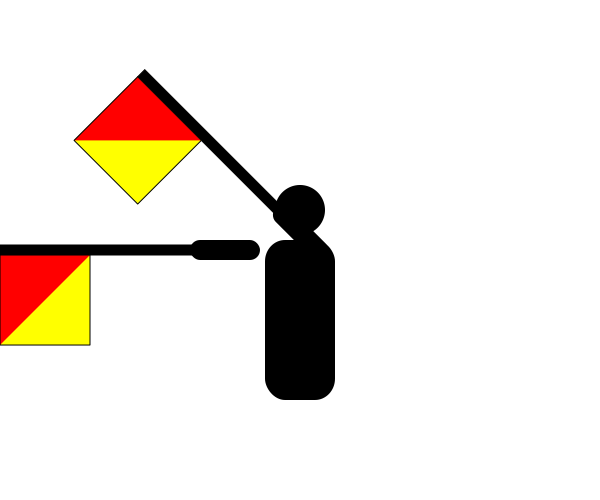
Semaphore
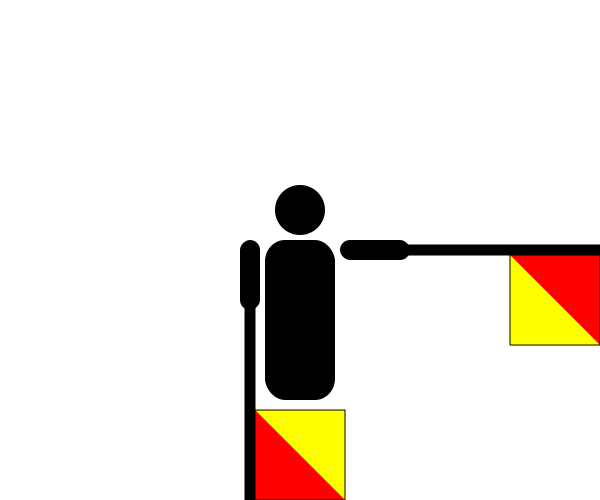
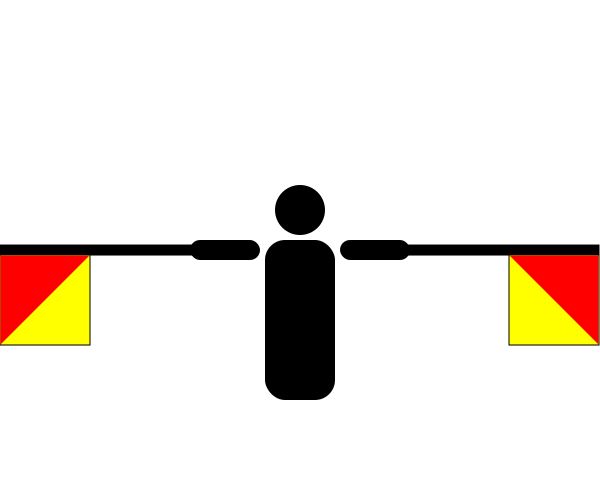

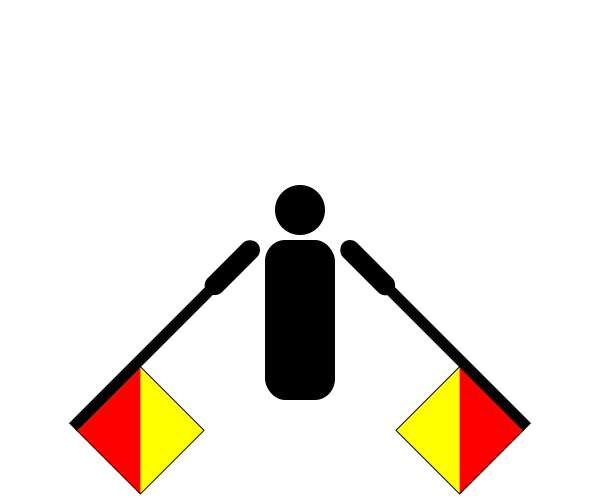

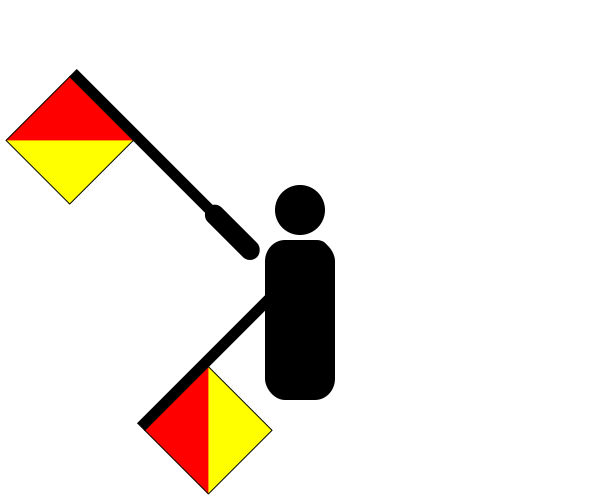

There are approximately 454 people named Francisco in the UK. That makes it one of Britain's least common surnames. Only around seven in a million people in Britain are named Francisco.
Origin: Iberian
Region of origin: Europe
Country of origin: Spain
Religion of origin: Christian
Language of origin: Spanish
