FITZGIBBON
Recorded variant spellings include Fitz Gibbon, Fitz-Gibbon, Fitz-gibbon, Fitzgibbon
Origins of the surname FitzGibbon are rooted in the Irish Gaelic tradition and in the subsequent Anglo‑Norman influence that arrived in the British Isles after the Norman invasion of Ireland in the late twelfth century. Fitz is a Norman patronymic prefix meaning “son of” and was applied to Gaelic personal names as a result of the intermingling of Norman settlers with the native population. The core element of the name, Giobúin or Gibbín, is a personal name of uncertain provenance, but it has commonly been linked to the Old Germanic elements that originally formed the name Gilbert (from gisil “hostage” and berha “brightness”). Consequently, FitzGibbon has long been understood as meaning “son of Gibbon”, with Gibbon in turn being a diminutive of Gilbert.
The earliest surviving references to the family appear in the Pipe Rolls of Oxfordshire of 1176, where a man named Ralph Gibiun is listed. This entry demonstrates that the name was already in use at the time of King Henry I’s reign, an era when the construction of churches and the establishment of English administrative structures were expanding across the island. The appearance of the surname in contemporary legal documents indicates that members of the family were recognised as part of the established society in the late twelfth century.
Throughout the Middle Ages, the FitzGibbons obtained a reputation for leadership and military service. In the seventeenth century one notable bearer, Jack Fitzgibbon (c. 1590–1660), played an active role in the Irish Confederate Wars of 1641–1653. He is recorded as a significant ally of the Earl of Clanricard and is credited with contributing to the decline of Anglo‑Norman power in Munster. In the eighteenth century the family continued to ascend socially and politically. John Fitzgibbon (1748–1802) served as Attorney General of Ireland and later participated in the legislative processes of the United Kingdom. His son, Edward Fitzgibbon (1748–1819), combined a military career as Major General with a parliamentary seat in the House of Commons.
Variations of the surname are numerous, reflecting both linguistic changes and the geographic dispersion of the family. The most common forms used in contemporary records include MacGibbon, Gibbon, Gibbin, Gibbins, Gibbs and Giblin. Anglicised versions such as Gibling and Gubbin are also mentioned in historical documents. Some spellings evolved through the addition of the Norman prefix, producing names like FitzGibbin, FitzGibbons, and FitzGibbons. These variations illustrate the manner in which the surname was adapted to different linguistic and administrative contexts across the British Isles.
In modern times the surname is most widely found in Ireland, with concentrations in the south and west, particularly in the counties of Cork, Kerry, and Galway. The name has also spread to the United Kingdom, where it is primarily concentrated in England’s south‑eastern region, especially London. In North America notable distributions occur in the United States, especially in Illinois, Pennsylvania, Massachusetts, Connecticut and California, while Canada shows significant numbers in Nova Scotia and Newfoundland and Labrador. The surname is present in Australia as well, mainly in New South Wales, Victoria and Western Australia. These patterns reflect the migration of Irish families to the English‑speaking world during the eighteenth and nineteenth centuries.
The FitzGibbon family has contributed to many fields across the centuries. In Ireland, the name remains tied to prominent political and military figures, and the family’s early roles in resistance against British rule are still commemorated in local history. In the United Kingdom, bearers of the surname include figures such as the athlete Lord Bobby Fitzgibbons and the Nobel Prize‑winning physiologist Sir John Carew Eccles, both of whom have made notable contributions to sports and science respectively. In the United States, individuals such as the politician and lawyer Edward Fitzgibbon and the author and psychologist Lesleyan Fitzgibbon have left their marks in public service and academia.
Overall, the FitzGibbon surname embodies a history that spans Gaelic origins, Norman influence, and modern global dispersion. Its bearers have consistently played roles of civic, military and cultural significance, and the name remains a respected and well‑recognised marker of Irish heritage in the contemporary world.
Typical given names associated with the FitzGibbon surname
Male
- Andrew
- Anthony
- David
- James
- John
- Mark
- Michael
- Patrick
- Paul
- Peter
- Thomas
Female
- Alison
- Emma
- Jane
- Joanne
- Julie
- Laura
- Lisa
- Margaret
- Mary
- Sarah
- Susan
Similar and related surnames
Related and similar names are generated algorithmically based on the spelling, and may not necessarily share an etymology.
How to communicate the surname FitzGibbon in...
Braille
⠋⠊⠞⠵⠛⠊⠃⠃⠕⠝
Morse
..-...---..--...-...-...----.
Semaphore
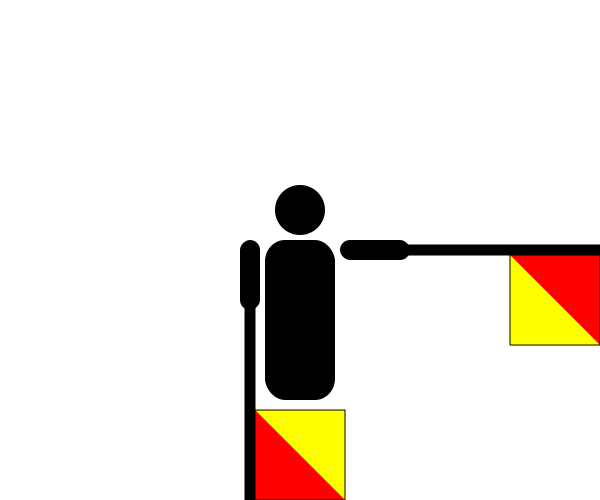
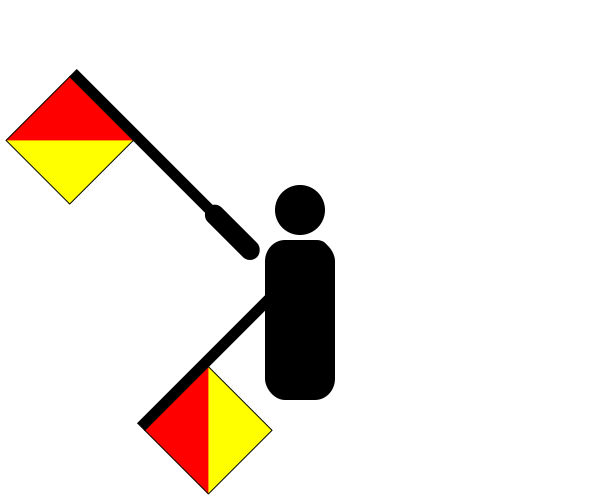
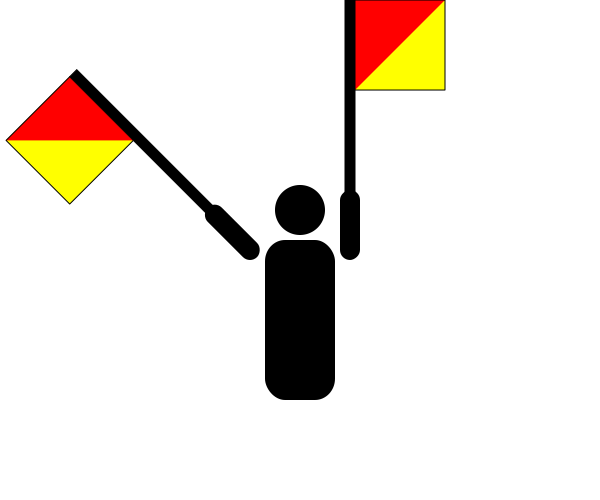


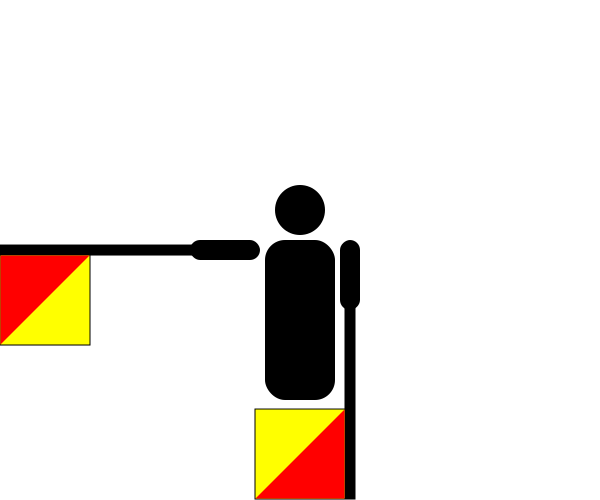
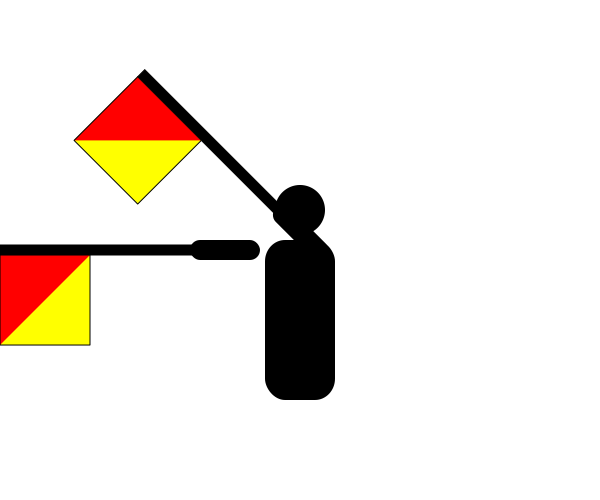
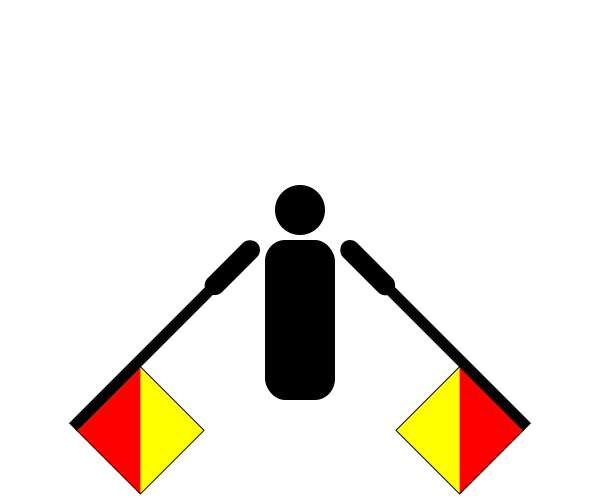
There are approximately 1,434 people named FitzGibbon in the UK. That makes it roughly the 5,559th most common surname in Britain. Around 22 in a million people in Britain are named FitzGibbon.
Origin: Celtic
Region of origin: British Isles
Country of origin: Ireland
Religion of origin: Christian
Language of origin: Gaelic

Famous people named FitzGibbon
- Theodora FitzGibbon - Cookbook writer (1916 to 1991)
- Desmond Fitzgibbon - WWI flying ace (1890 to 1919)
Names and descriptions courtesy of Wikipedia, and may contain errors. This is not intended to be an exhaustive list of every famous person with this name.