FINKLE
Finkle is an English surname that has evolved from several linguistic and cultural roots. In its earliest form it is derived from the Old English word fincel, which means a small finch. The name was originally a nickname given to a person who resembled the bird or who possessed a small stature or a pleasant, sing‑like voice.
During the Anglo‑Saxon period, before the 10th century, a diminutive form Finc(ho) was in use. This was a term of endearment translating literally as “the finch” or “little bright bird”. Over time it became a baptismal name and eventually a hereditary surname. Recorded instances date back to the fifteenth and sixteenth centuries in England. For example, Bridgeta Finkle—also known as Bridget Fynkyll—married Daniell Blackeborne at St. Martin in the Fields on 17 June 1576. The earliest free‑hand record of the family name is a christening entry for Bridget Fynkyll dated 1 September 1555, in the parish of Westminster, London during the reign of Queen Mary I.
By the early seventeenth century the name appeared in Northumberland, though usually in spelling variants such as Fenkell, Finkell or Fincaill. An example is the registration of Edward Finkle at Warkworth on 25 August 1695, in the reign of William of Orange. The surname has also been found in continental Europe, especially in Germany, the Netherlands and Belgium. In those regions the form Fink and its derivatives Finker, Finkman and Vinck appear, all retaining the original meaning related to the bird. The occupational surname Finch describes a person who reared finches for delicacy, a tradition that also shares the same root.
A distinct topographic origin occurs among some branches of the family in German‑speaking areas. Here Finkle derives from the Middle High German word vinkel, meaning “angle” or “corner”. The name was typically given to a person who lived on a street corner or at the junction of two natural features, thus indicating a location or property. Variants produced by this process include Finkel, Finkell, Finkill and Finckle.
In the Ashkenazi Jewish tradition, the surname also appears, deriving from the Yiddish word for “sparkle” or “spark”. It likely referred to a lively or energetic ancestor. Although the name is uncommon, it is recorded in the United States (particularly New York), Israel and Canada, with smaller concentrations in other European countries and in South Africa.
Across all traditions, the surname reveals a rich tapestry of linguistic influences. Common spelling variants that have been documented include Finkel, Finkell, Finkill, Finckle, Finckel, Finkler, Finkelman and Finkelstein. The diversity of forms reflects changes over centuries caused by regional pronunciation, migration and the natural evolution of spelling conventions. Genealogical research is therefore essential for tracing familial connections across the different orthographic variations that now exist.
Typical given names associated with the Finkle surname
Male
- Alan
- Arye
- David
- Matthew
Female
- Joan
- Kirsty
- Marie
- Mary
- Nicola
Similar and related surnames
Related and similar names are generated algorithmically based on the spelling, and may not necessarily share an etymology.
How to communicate the surname Finkle in...
Braille
⠋⠊⠝⠅⠇⠑
Morse
..-...-.-.-.-...
Semaphore
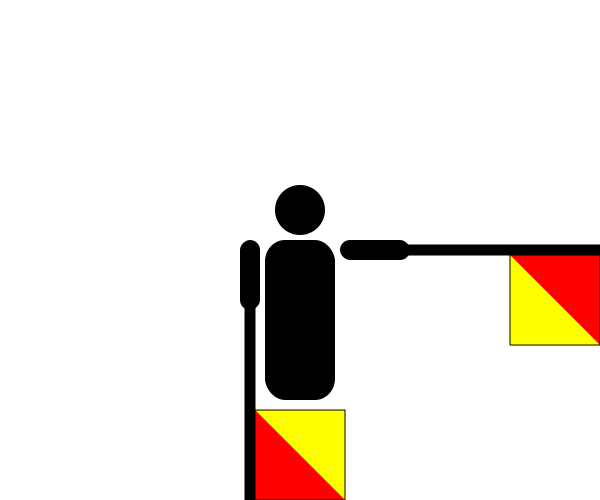
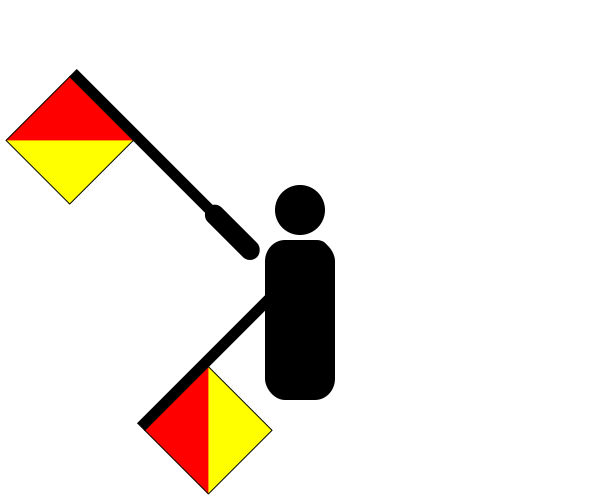
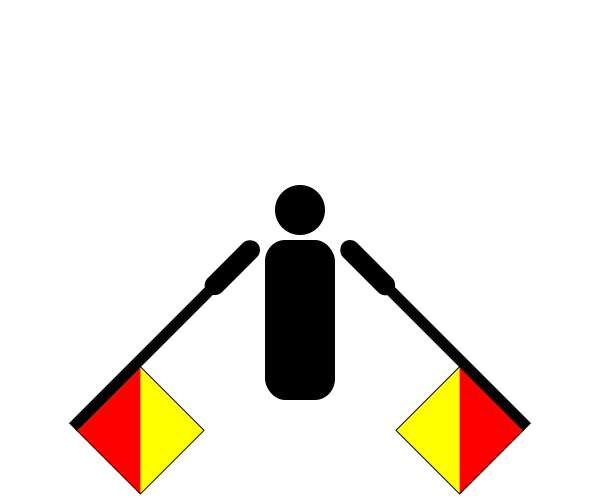
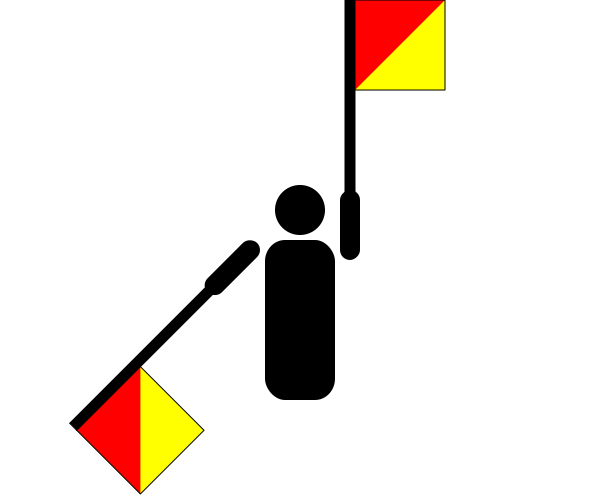


There are approximately 101 people named Finkle in the UK. That makes it one of Britain's least common surnames. Only around two in a million people in Britain are named Finkle.
Origin: English
Region of origin: British Isles
Country of origin: England
Religion of origin: Christian
Language of origin: English
