FINDLATER
Findlater is a surname of distinctly Scottish provenance, with linguistic elements traceable to Old Norse. The name is known as a locational surname derived from the place called Findlater in Banffshire, situated within the parish of Fordyce.
The earliest known English renderings of the name include Findlater, Finlater, and Finlator. The most generally accepted etymology interprets the name as originating from the Old Norse elements *finnr*, meaning a personal name *Finn*, and *leitr*, meaning *search* or *lookout*. Consequently, the surname has been understood as "Finn's lookout" or "Finn's search."
Historical records begin with the juror Galfridus de Fynleter, noted in an inquest in the year 1342, and continue with the entry of Johanna de Fynletir in 1366, where she conveyed her possessions—including the lands of Findlater—to her husband. These documents appear in the registers relating to the Great Seal of Scotland.
The Findlater nomenclature is associated with the Clan Ogilvy, holders of the earldom of Findlater and the earldom of Airlie. The Ogilvy clan played prominent roles in the Stuart restoration endeavours. After the defeat at the Battle of Culloden in 1745, the leaders were exiled to France and many followers faced severe punitive measures. It is not definitively known whether members of the Findlater line suffered comparable fates, but contemporary accounts suggest it is possible.
A notable bearer of the name, Andrew Findlater (1810–1885), achieved distinction as the first editor of Chambers Encyclopaedia and was regarded in his era as a leading source of knowledge.
Other accounts maintain that the surname may link to the county of Fife. In this view, the element Find refers to Fife and later denotes marshland, thereby indicating an individual originating from a marshy region within the county. This interpretation is offered by several historical descriptions of the name’s geographic use in Scotland.
During the 17th and 18th centuries, the Findlater surname proliferated throughout Scotland, with bearers often engaged in commerce, fishing, banking and military service. The name later travelled beyond British shores, with many Findlaters settling in Canada and the United States. One of the most prominent modern figures was General Sir John Findlater, who commanded Allied Forces in France during the First World War.
In contemporary times, the surname persists in various forms across the United Kingdom and internationally. While spelling variations such as Finlayson, Findlay and Findley are common, the spelling Findlater remains widely recognised and continues to signify a heritage deeply rooted in Scottish land and culture.
Typical given names associated with the Findlater surname
Male
- Alan
- Alexander
- Andrew
- David
- James
- John
- Kevin
- Mark
- Paul
- Richard
- Robert
- Ross
- Scott
- William
Female
- Andrea
- Christine
- Donna
- Heather
- Irene
- Jean
- Joyce
- Julie
- Lorraine
- Margaret
- Mary
- Sarah
- Susan
Similar and related surnames
Related and similar names are generated algorithmically based on the spelling, and may not necessarily share an etymology.
How to communicate the surname Findlater in...
Braille
⠋⠊⠝⠙⠇⠁⠞⠑⠗
Morse
..-...-.-...-...--..-.
Semaphore
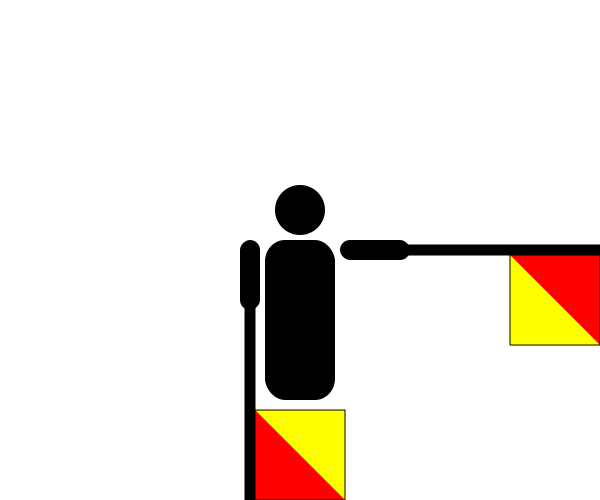
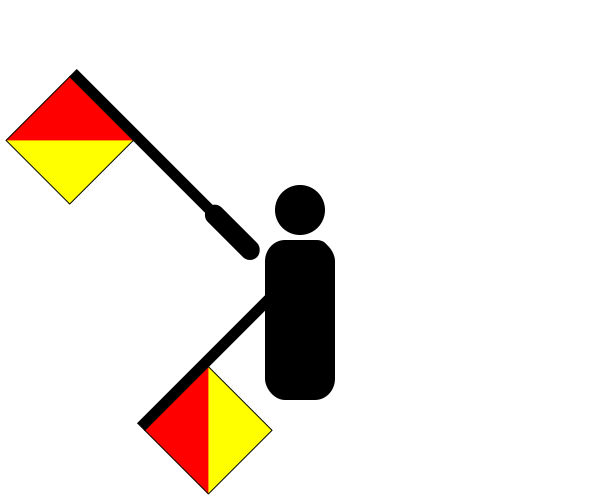
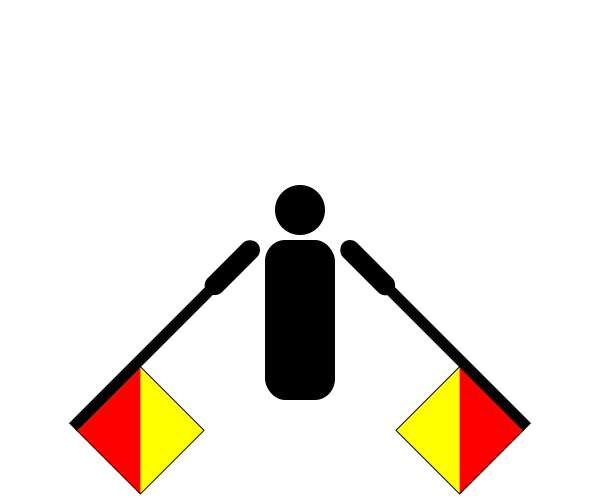


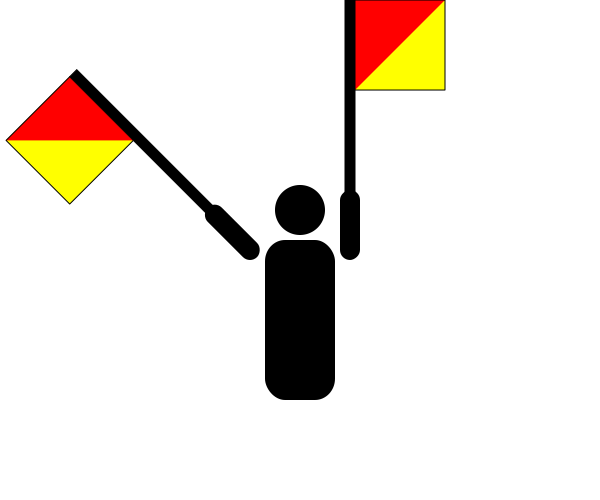

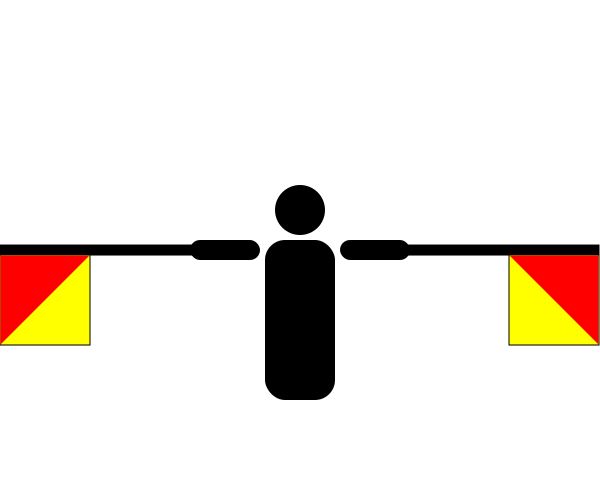
There are approximately 848 people named Findlater in the UK. That makes it roughly the 8,409th most common surname in Britain. Around 13 in a million people in Britain are named Findlater.

Famous people named Findlater
- George Findlater - Army piper and Victoria Cross recipient (1872 to 1942)
- Jane Findlater - Writer (1866 to 1946)
- John Findlater - Meteorologist and air crash investigator (1926 to 2013)
Names and descriptions courtesy of Wikipedia, and may contain errors. This is not intended to be an exhaustive list of every famous person with this name.