FILBY
The surname Filby is a locational name of English origin, documented in the Domesday Book of 1086 as Filebey and later recorded in the 1165 Feet of Fines for Norfolk as Filebi. It derives from a village situated north‑west of Yarmouth in North Norfolk, and the name is believed to have arisen from the Old Norse personal name Fili combined with the Old English suffix by, meaning “farm” or “settlement.” Consequently, the surname can be interpreted as “Fili’s farm” or “settlement.”
Alternate explanations of the etymology link the name to an Anglo‑Saxon personal name, Filba, composed of the elements fil (which could denote “very” or “exceedingly”) and beah or beg (“ring”, “crown” or “bracelet”). The same by suffix denotes a homestead, suggesting the meaning “Filba’s homestead” or, more loosely, “very precious dwelling.” Both accounts emphasise a Scandinavian influence on the place‑name element while recognising the name’s English roots.
The earliest known bearers of the name appear in the thirteenth century. In 1273 a Roger de Fileby is recorded in Norfolk, followed by Adam de Phyleby of Wenlock, Shropshire, in 1287 and Simon de Filby of London in 1310. The name was also held by ecclesiastical figures: Nicholas de Fyleby served as rector of Burgh in Norfolk in 1315, and Richard de Phileby held the rectory of Stokesby, Norfolk, in 1325. The first documented spelling of a personal name is that of Nicholas de filebi (1202), appearing in the Feet of Fines of Norfolk during the reign of King John.
Throughout history, the name has appeared in several spelling variations, including Filbee, Filbey, Philby and Philbey. The distribution of the surname is most concentrated in the United Kingdom, with notable presences in Australia, the United States and Canada, reflecting the migration of British families overseas. Historical records often associate the name with Quaker communities, and a contemporary organisation, the Filby Association, provides a platform for descendants of all spelling variants to obtain genealogical information and to connect worldwide.
Over the centuries, variations in spelling have arisen from factors such as regional accents, levels of literacy, and differing transcriptions of documents. The surname remains relatively uncommon in England today, yet it persists in diaspora communities where the name came to be adopted by emigrants seeking to retain a link to their place of origin.
In summary, the surname Filby exemplifies the blending of Norse and Anglo‑Saxon influences in toponymic naming. Its documented history, from the Domesday Book through medieval ecclesiastical records to modern genealogical society, reflects a continuous thread of identity tied to a specific locality in Norfolk and to the broader narrative of migration and name preservation within the English‑speaking world.
Typical given names associated with the Filby surname
Male
- Alan
- Brian
- Christopher
- Daniel
- David
- James
- John
- Mark
- Michael
- Paul
- Peter
- William
Female
- Carol
- Denise
- Emma
- Jane
- Janet
- Jennifer
- Julie
- Kathleen
- Patricia
- Sally
- Sarah
- Susan
Similar and related surnames
Related and similar names are generated algorithmically based on the spelling, and may not necessarily share an etymology.
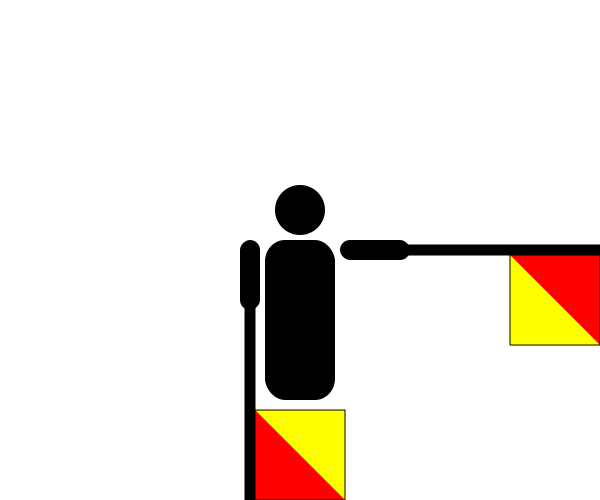
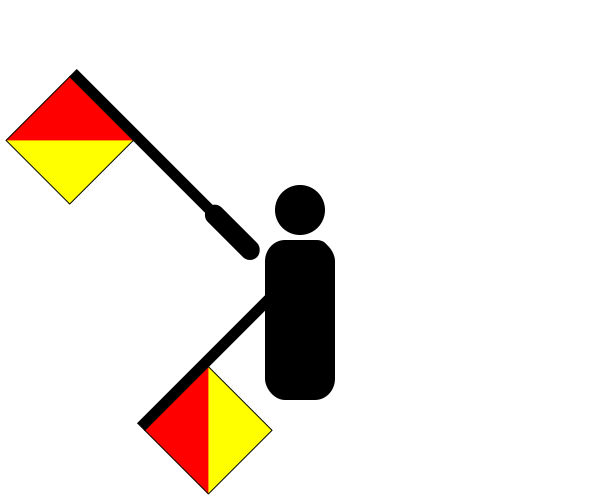
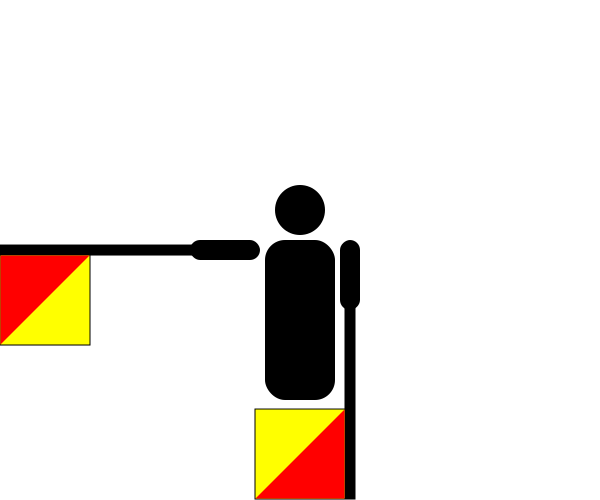
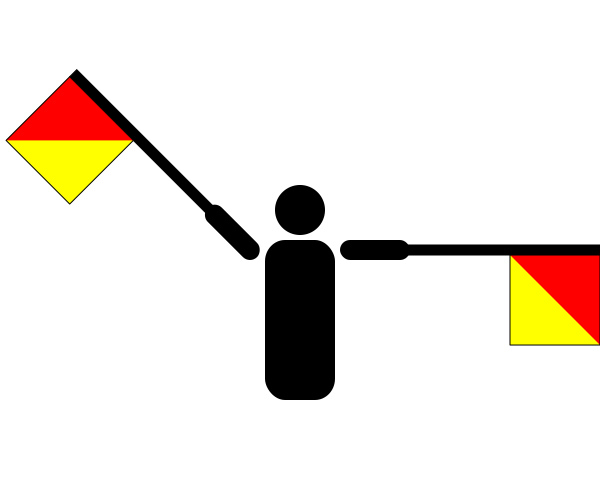
How to communicate the surname Filby in...
Braille
⠋⠊⠇⠃⠽
Morse
..-....-..-...-.--
Semaphore

There are approximately 1,422 people named Filby in the UK. That makes it roughly the 5,603rd most common surname in Britain. Around 22 in a million people in Britain are named Filby.
Surname type: Location or geographical feature
Origin: English
Region of origin: British Isles
Country of origin: England
Religion of origin: Christian
Language of origin: English
