DOUCETTE
Doucette is a surname of French origin that has, over the centuries, found a presence in a range of countries, predominantly within the English‑speaking world and among Francophone communities. The name is historically linked to the French word douce, meaning "sweet" or "gentle", and to the Latin word dolcis of the same sense, indicating a nickname originally bestowed upon someone of a mild or kind nature.
The earliest known spelling of the family name is believed to be that of Hugo le Duz, recorded in the cartulary of Oseney Abbey in Oxfordshire during the reign of King John (1200). Subsequent documentary evidence from the thirteenth and early fourteenth centuries in England lists individuals such as Duze Rannulfi (1219, Assize Court rolls, Yorkshire), Gilbert le Dus and Godfrey le Douz (1296, Subsidy Tax rolls, Sussex), and Walter Dous or Douce (1327, Subsidy Rolls, Worcestershire). These records demonstrate the surname's presence in the British Isles from the early medieval period onward.
In France, the name “Doucette” is most prevalent in the region of Normandy, from which a number of bearers emigrated. It is considered to have derived from the Latin ducetus, meaning “little duke”, implying an ancestral link either to a chieftain or to a person who held a modest fief. This connection to Norman nobility suggests that some younger sons of the high nobility may have carried the name as they sought new fortunes beyond their ancestral estates.
During the period of French colonisation, individuals bearing the surname migrated to Canada and the United States. In North America the name is most commonly found in the states of Massachusetts, Maine, and Louisiana, all of which possess long histories of French influence. In Canada it is most prevalent in the provinces of Quebec and Nova Scotia, with significant presence also in the French‑speaking portions of Switzerland and Belgium. The name is generally associated with French‑Canadian, Acadian (Cajun), and Basque communities, and remains a testament to transnational migration patterns.
Over time, the surname has appeared in a variety of orthographic forms, including Duce, Douce, Dowse, Douche, Doucet, Doucette, Doussain, Dolci, Dolcetti, Dolcini, Dolcino, Lo Dolce, Ledoux, Ducet, Duquet, Duquette, Duchateau, Ducheteau, Duchette, Duchemin and others. These variants reflect changes in spelling conventions, transliteration processes undertaken by immigration officials, and regional adaptations. The multiplicity of spellings is a common feature of surnames with deep historical roots and broad geographic dispersion.
Typical given names associated with the Doucette surname
Male
- Nicholas
Female
- Marie
Similar and related surnames
Related and similar names are generated algorithmically based on the spelling, and may not necessarily share an etymology.
How to communicate the surname Doucette in...
Braille
⠙⠕⠥⠉⠑⠞⠞⠑
Morse
-..---..--.-..--.
Semaphore

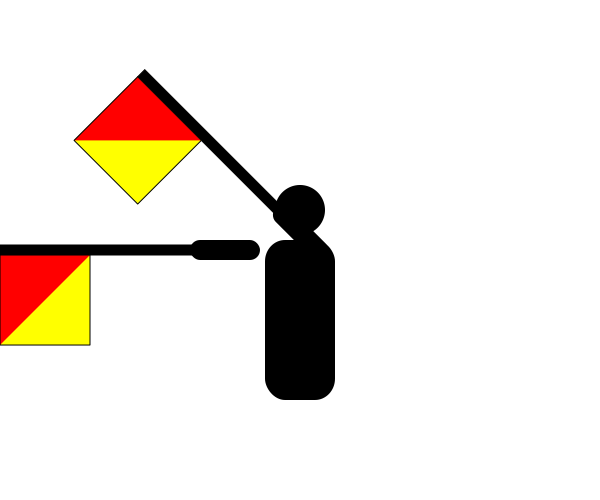


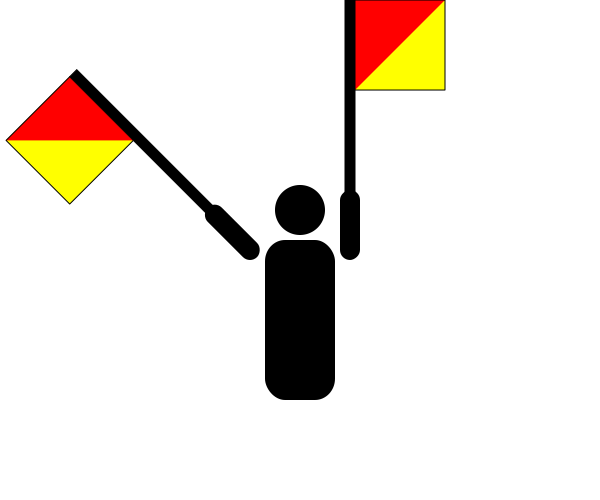
There are approximately 26 people named Doucette in the UK. That makes it one of Britain's least common surnames. Fewer than one in a million people in Britain are named Doucette.
Origin: English
Region of origin: British Isles
Country of origin: England
Religion of origin: Christian
Language of origin: English
