DORING
Doring is a surname of Germanic origin that has been preserved in several orthographic forms, notably Döring, Doering and Doring. The name has a dual provenance, deriving both from a German toponymic source and from an Anglo‑Saxon patronymic tradition.
In the Germanic context the name is typically explained as a habitational or toponymic surname. It is derived from the Middle High German word dor – meaning “thorn” – and was originally ascribed to persons dwelling near a thorn bush or a thorn‑laden landscape. A related derivation from the Old High German stem drûr, also meaning “thorn” or “prickle”, has produced the wider array of spellings associated with the name. In another German line a similar surname arose from the word doren, translated as “pine tree”, whereby families living in pine‑rich territories or engaged in construction using pine were identified by the toponym. By the fifteenth century, occupation as a builder of fortifications and ships in Brandenburg had been recorded under the spelling Döring.
The Anglo‑Saxon origin of the surname lies in the Old English personal names Deoring or Dyring, patronymic compounds of Deor or Dyre which mean “dear” or “beloved”. The suffix -ing denoted “the sons or descendants of”, so that Deoring literally meant “descendants of Deor”. Early documentary evidence of the name predates the Domesday Book; the Saxon Chartulary records an Aelfsige Dyring in 955, while the Domesday Book of 1086 contains references to a Kentish tenant called Derinc filius Sired. Subsequent medieval records – the 1185 Knights’ Templars Records of Kent, the 1190 Book of Seals for Berkshire and various Subsidy and Poll Tax returns – preserve a series of spellings: Dering, Deryng and Doring.
The name underwent a heraldic formalisation in 1664 when a green shield bearing three silver buck’s heads, attired in gold, was granted to the family. This coat of arms, still borne by some bearers of the surname today, visualises the strength and resilience often associated with the family’s heritage.
Modern statistics show that Döring remains a common surname in Germany, ranking at number 266 in 2019 and fluctuating in the vicinity of 65,000 bearers by 2020. It is most prevalent in the northern and central‑eastern states – Berlin, Brandenburg, Saxony and Bavaria – yet the name persists across the globe, with notable populations in the United Kingdom, the United States, Canada, Australia, Latin America and South Africa. In the United States many families have west‑coast concentrations, while in Canada a larger presence is seen in the Atlantic provinces. Variants such as Dorring, Durring, Doering and Deering are common in English‑speaking countries, indicating a branching of the original Germanic line into the Anglo‑Saxon lineage.
Throughout its history the surname Doring has been a marker of both lineage and geography. Whether denoting a person who lived among thorn‑bushes, a builder of pine‑based fortifications, or a descendant of a beloved ancestor, the name encapsulates a dual heritage. Its persistence through the last five centuries and across continents underscores a resilient link between individuals and their ancestral past, a link that continues to be expressed in modern genealogical and cultural studies.
Similar and related surnames
Related and similar names are generated algorithmically based on the spelling, and may not necessarily share an etymology.
How to communicate the surname Doring in...
Braille
⠙⠕⠗⠊⠝⠛
Morse
-..---.-...-.--.
Semaphore

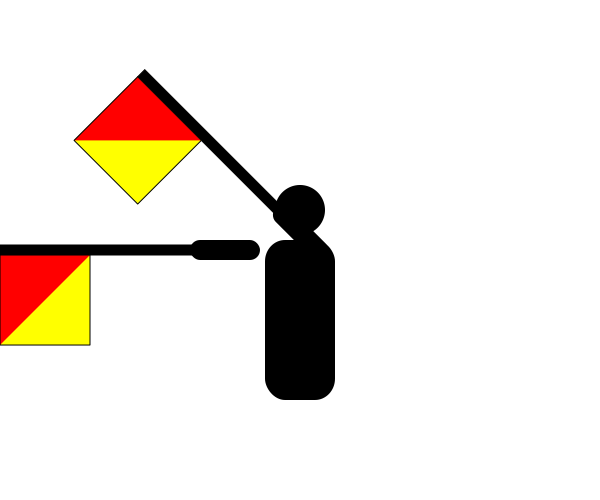
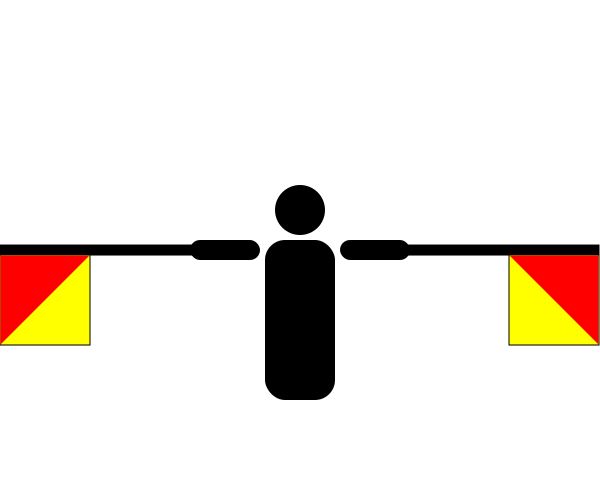
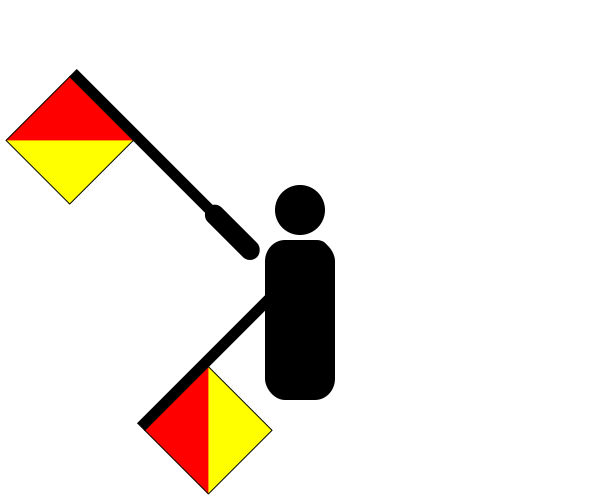
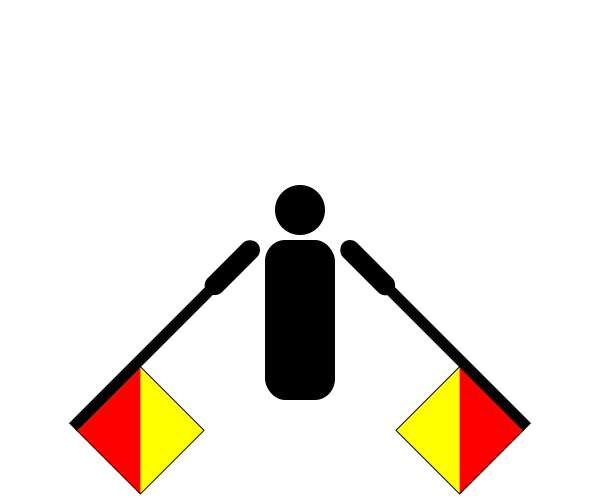

There are approximately 50 people named Doring in the UK. That makes it one of Britain's least common surnames. Only around one in a million people in Britain are named Doring.
