DITTY
Ditty is an English surname that can be traced back to the medieval period. The name is recorded in English documents from the early fourteenth century and has survived into modern times in both the United Kingdom and abroad.
Its earliest linguistic form derives from the Middle English words dite and ditty, which mean a short poem or song. As a nickname it was normally applied to a person who composed, sang, or was otherwise associated with such verses. The cheerful connotations of the word implied a lively or merry character, a quality that was highly regarded in medieval society.
Another proposed derivation is from the Old French word ditour, introduced into England after the Norman invasion of 1066. In this context the name could have described a songwriter or a town‑crier, a person trained to make public announcements in a town or court. The bilingual origin explains why the surname appears in a number of spellings that reflect English, French, and later German conventions.
The first definitive record of the surname is Helewisa Ditr, mentioned in the Subsidy Tax Rolls of Sussex in 1327 during the reign of King Edward III. Mid‑century entries from London show a variety of forms: George Ditter was christened at St. Margaret’s Westminster on 17 July 1587; Mary Dittie at St. Peter‑le‑Pore on 2 November 1620; Sarah Dyter on 25 May 1701; Jesse Ditty at St. Dunstans, Stepney, on 3 January 1713; and Edward Dittson witnessed a deed at St. Andrews Holborn on 4 February 1754.
Throughout the centuries the name has been recorded in numerous spellings. Common variants include Dite, Ditt, Ditte, Ditts, Dittson, Dittie, Ditty, Diter, Ditter, and Ditour. These forms reflect linguistic shifts, regional pronunciation differences and the practical need for consistency in handwritten records.
Although the surname is historically rooted in England, archaeological and genealogical research shows that its bearers also dispersed to Ireland, Scotland, Wales, the United States, Canada and Australia. In England it has long been associated with Lancashire, where records date back to the twelfth century. In the United States, the name is largely found in the southeastern states, with pockets in the Midwest, traceable to early nineteenth‑century German and Irish immigrants.
A cultural artefact that illustrates the family's musical heritage is the so‑called “Ditty Box.” Traditionally a wooden or tin chest, it was used to store poems, songs, and occasionally simple instruments, and was passed from generation to generation. The box provides a tangible reminder of the value placed on song and lyric in the Ditty lineage.
Other scholarly examinations have identified similar surnames in German and Gaelic contexts, such as the Germanic Dietrich or the Irish Ó Deitigh. These studies explain the presence of spelling variations like Dietsch or Dyts, but they are separate linguistic families from the English common ancestor described above.
In sum, the surname Ditty is a historically grounded English name whose meaning centres on the art of song and poetry. Its recorded variants reflect a variety of linguistic influences, and its survival through the centuries attests to the enduring cultural importance of music within the families that bear it.
Typical given names associated with the Ditty surname
Male
- Alan
- Allah
- Graeme
- Robert
- William
Female
- Carole
- Helen
- Mary
- Phyllis
- Tiffany
Similar and related surnames
Related and similar names are generated algorithmically based on the spelling, and may not necessarily share an etymology.
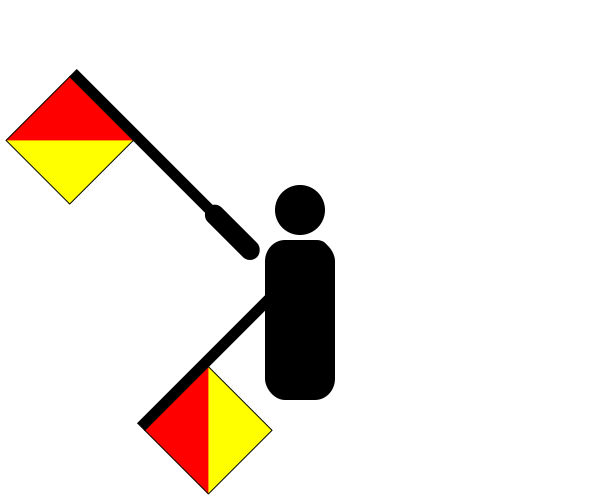
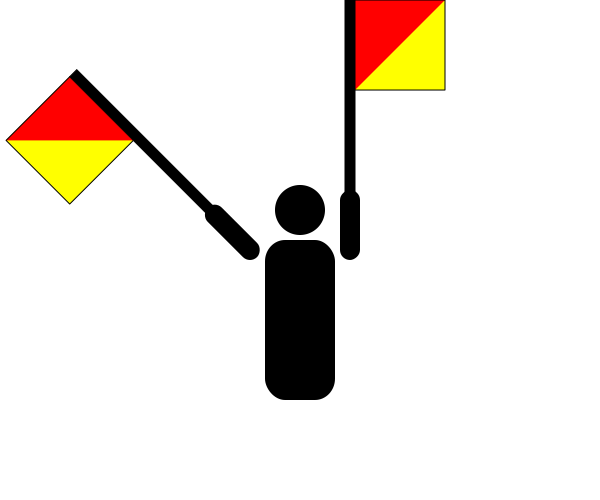
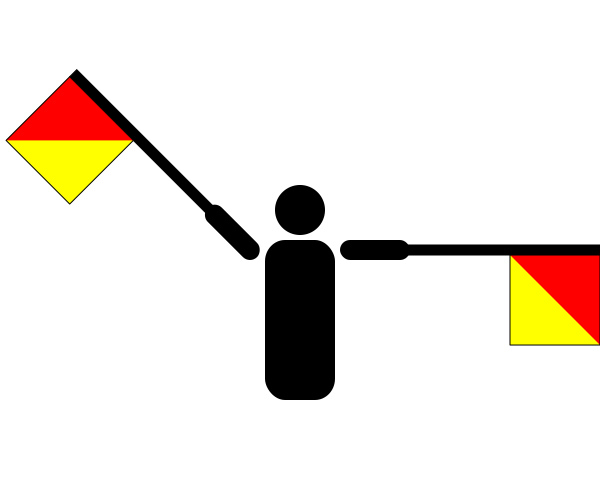
How to communicate the surname Ditty in...
Braille
⠙⠊⠞⠞⠽
Morse
-....---.--
Semaphore

There are approximately 62 people named Ditty in the UK. That makes it one of Britain's least common surnames. Only around one in a million people in Britain are named Ditty.
