DISBROW
Disbrow is a surname of pure English provenance. Its earliest etymology is linked to the Old-English personal name Deusberht, a compound of dei (god) and berht (bright). The literal meaning of the root name is therefore “bright god”. In the early medieval period surnames were commonly used to identify the heirs or kin of a notable individual, and Disbrow is an example of a patronymic surname that signalled descent from a person named Deusberht.
Geography also played a decisive role in the evolution of the name. Two villages, both of which give their name to the family, are documented in historical records. The first is Desborough in Buckinghamshire, a settlement whose name is derived from the Old-English word dwostle (a fragrant herb now called pennyroyal) combined with beorg (hill or fortified place). The second is a locality in Northamptonshire, originally called Deoresburh and meaning “the strong fort”. These locational origins explain the variant spellings Desborough, Desbrow and Disbrow that have appeared throughout British parish registers.
An alternative, topographic hypothesis also exists. The name may have been adopted by inhabitants of a place situated near a dike or embankment that met a brook. In Old-English, dic means “dike” and broc means “brook” or “stream”. Consequently, a settler living on or adjacent to a “dic‑broc” feature could conceivably be recorded as Disbrow. The lack of a single definitive etymology reflects the common practice of surnames evolving from several different geographic and occupational sources over centuries.
During the 17th century the surname became associated with notable public service in England. Major General John Desborough served in the army of the English Parliament, was later a member of Parliament for Cambridge and, in 1648, signed the death warrant of King Charles I. Court and parish documents from the same period record individuals such as Richard Desborough, who married Bridget Woodland at St. James Clerkenwell in 1722. These records confirm the widespread establishment of the name in the Midlands and the capital.
Following the initial migration of families bearing the name to North America in the 17th and 18th centuries, the surname diversified in spelling. The possibilities Disbrou, Disbro, Disborough and Disborrow are all attested, owing in part to the absence of standardised spelling in that age. The variation Disbrow’s occasionally appears and suggests a “son of” or “servant of” form, although no definitive evidence supports a patronymic derivation from this suffix in the case of the name. Subsequent generations of the family settled predominantly in the United States and Canada, where the surname has remained most frequently found today, a pattern typical of many English surnames that migrated to English‑speaking colonies.
In contemporary society the surname Disbrow might still be linked with a narrow geographical reference in England, but its existence across the Atlantic reflects the broader history of English emigration. The family name therefore stands as an illustration of how patronymic, locational and topographic elements can intertwine, and how migration can disperse a distinctly English surname throughout the world.
Similar and related surnames
Related and similar names are generated algorithmically based on the spelling, and may not necessarily share an etymology.
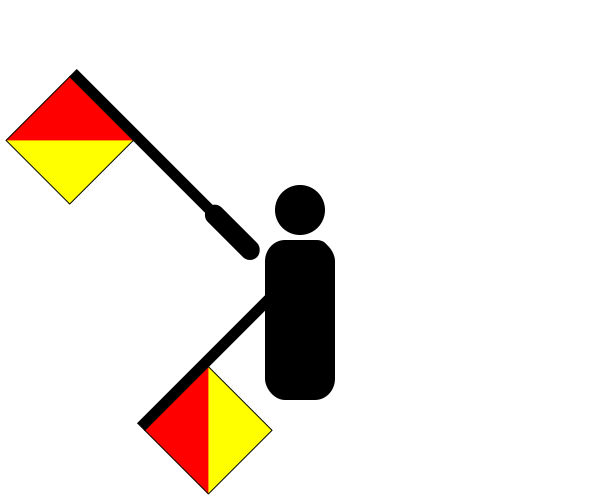
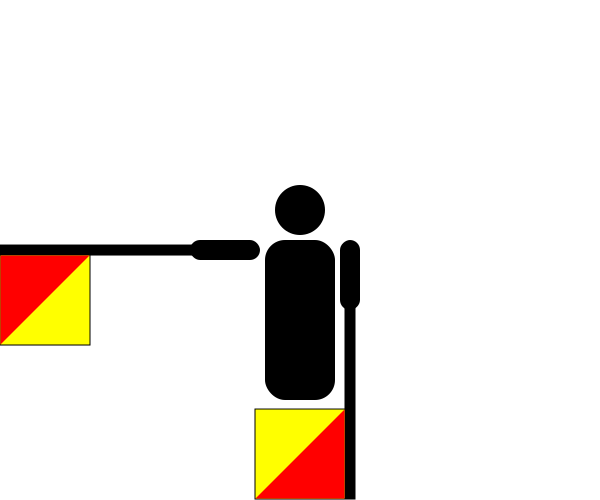
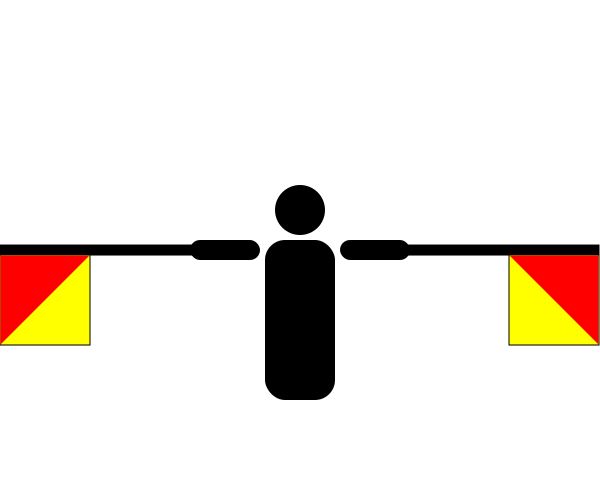
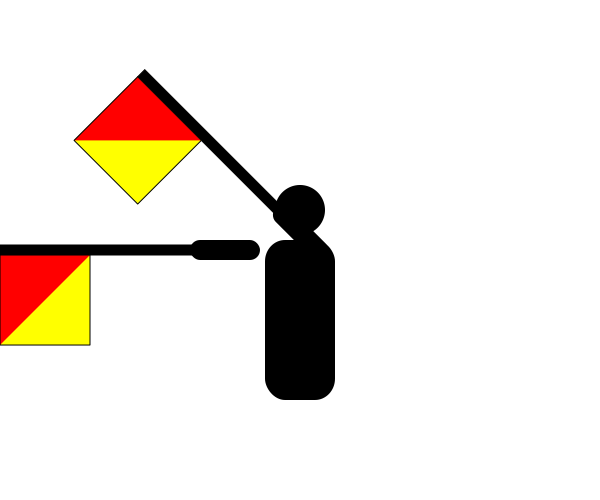
How to communicate the surname Disbrow in...
Braille
⠙⠊⠎⠃⠗⠕⠺
Morse
-.......-....-.---.--
Semaphore


Sorry, we don't have any statistics on this name. That's probably because it's very uncommon in Britain.