DENNETT
The surname Dennett is a patronymic English surname derived from the medieval personal name Dennis, itself a Latinised form of the Greek name Dionysios. The Greek origin of the name traces back to Dionysios, a name that was associated with the ancient Greek god Dionysus, the god of wine and revelry. The use of Dennett as a surname therefore reflects an initial identification of a person as the “son of Dionysius” or, more succinctly, the descendant of an individual named Dennis.
The suffix -ett employed in Dennett is a French diminutive, indicating “little” or “dear.” In this context the surname can be interpreted as little Dennis or young Dennis. Such diminutive forms were common in medieval England as a means of distinguishing individuals within a community where the same forenames were widespread.
Historical documentary evidence records the earliest spellings of the name in the late thirteenth century. The names Alice Denet appears in the Hundred Rolls of 1279, and earlier spellings such as Dynot (1279 Oxford) and Denot (1332 Sussex) can be found in contemporary records. These variations demonstrate the fluidity of orthographic practices in a period long before standardisation of spelling.
Over the centuries the surname migrated from England to the United States and Australia, where it remains relatively uncommon but is noted for its presence in New Hampshire and Maine. According to analysis by genealogical database Forebears, Dennett ranks as the thirty‑eight‑thousand‑two‑hundred forty‑fourth most common surname in the world, with the highest concentration of bearers in England, followed by the United States and then Australia.
Numerous spelling variants are recognised as derivatives or closely related forms of the name. These include Dennet, Dennitt, Denet, as well as compound forms such as Denison, Dennison, and Dennett‑Smith. Such variants arose through regional pronunciation differences or transcription errors in parish registers, census entries, or immigration documents. Despite orthographic differences, genealogical research consistently ties these forms back to the original Dennett lineage.
In literary and historical contexts the surname may appear with additional particles, for example De Dennet, to indicate belonging to the Dennett family. The use of hyphenation or the placement of a space between components of a double-barrelled surname is a personal or regional preference that has emerged as the name has been adopted in various societies.
Typical given names associated with the Dennett surname
Male
- Andrew
- Christopher
- David
- James
- John
- Mark
- Michael
- Paul
- Peter
- Richard
- Stephen
Female
- Caroline
- Emma
- Helen
- Jacqueline
- Janice
- Joanne
- Laura
- Margaret
- Mary
- Patricia
- Sarah
- Sharon
- Susan
Similar and related surnames
- Dannatt
- Danet
- Dannat
- Dennet
- Dand
- Danda
- Dande
- Dandi
- Dandie
- Dando
- Dandoe
- Dannath
- Dannet
- Dannett
- Dannit
- Dannott
- Dant
- Danta
- Dante
- Danti
- Danto
- Danuta
- Daunat
- Daunt
- Deanda
- Deant
- Dehnad
- Deinde
- Denat
- Dend
- Denda
- Dende
- Dendi
- Dendie
- Denedo
- Denet
- Denett
- Denetto
- Deneut
- Deniaud
- Denitt
- Denitto
- Dennete
- Denneth
- Dennit
- Dennitt
- Denot
- Denotti
- Dent
- Dente
- Denti
- Denut
- Denwette
- Dianat
- Dianda
- Dignat
- Dignatt
- Dind
- Dindi
- Dinita
- Dinitto
- Dinnet
- Dinnett
- Dinoto
- Dint
- Donadi
- Donadio
- Donado
- Donat
- Donate
- Donati
- Donato
- Donatt
- Dond
- Donda
- Donde
- Dondi
- Dondo
- Doneddu
- Donet
- Donett
- Donetta
- Donetti
- Donnat
- Donnet
- Donnett
- Dont
- Dontu
- Dounnett
- Dugnid
- Dunat
- Dunda
- Dunde
- Dundee
- Dundie
- Dunett
- Dunnet
- Dunnett
- Dunnette
- Dunnitt
- Dunt
- Dynda
- Dynott
- Taint
- Tanada
- Tanatt
- Tand
- Tanda
- Tande
- Tandi
- Tandia
- Tando
- Tanedo
- Tannatt
- Tannet
- Tannett
- Tannetta
- Tant
- Tanta
- Tantau
- Tante
- Tanti
- Tantia
- Tanto
- Taunt
- Tenda
- Tendi
- Tendo
- Tenet
- Tennat
- Tenndt
- Tennet
- Tenneti
- Tennett
- Tent
- Tente
- Tento
- Tenuta
- Tinde
- Tint
- Tinta
- Tinte
- Tinti
- Tinto
- Tognetti
- Tond
- Tonda
- Tondi
- Tondo
- Tondu
- Tonet
- Tonetti
- Tonetto
- Toniato
- Tonietti
- Tonita
- Tonnet
- Tont
- Tonti
- Towned
- Tugnait
- Tugnet
- Tugnett
- Tugnott
- Tugnutt
- Tunda
- Tunde
- Tundo
- Tunnett
- Tunt
- Tynte
Related and similar names are generated algorithmically based on the spelling, and may not necessarily share an etymology.
How to communicate the surname Dennett in...
Braille
⠙⠑⠝⠝⠑⠞⠞
Morse
-...-.-..--
Semaphore


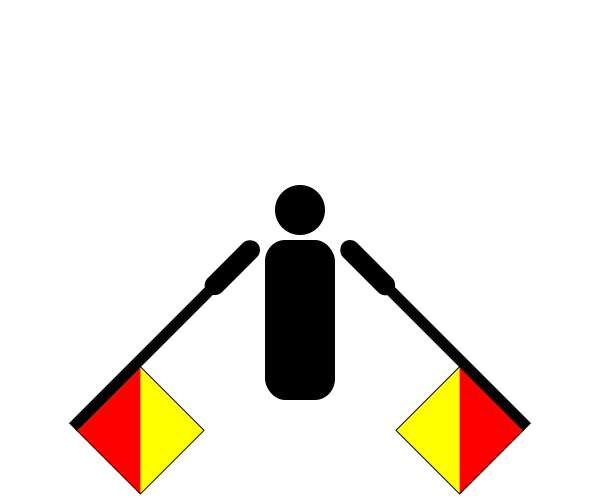
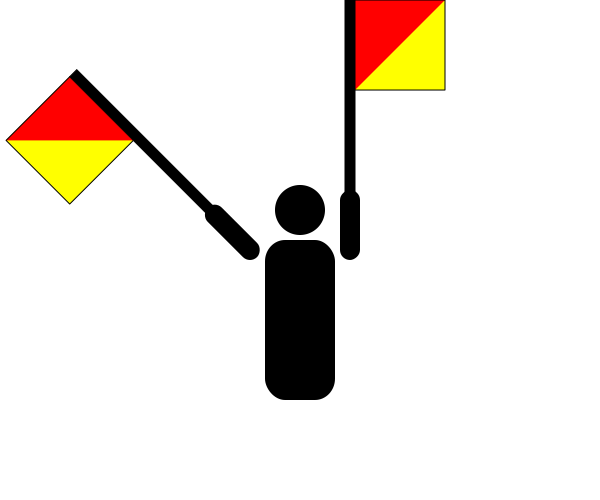
There are approximately 3,124 people named Dennett in the UK. That makes it roughly the 2,887th most common surname in Britain. Around 48 in a million people in Britain are named Dennett.
Surname type: Diminutive
Origin: English
Region of origin: British Isles
Country of origin: England
Religion of origin: Christian
Language of origin: English

Famous people named Dennett
- George Dennett - Cricketer (1879 to 1937)
- Pruett Mullens Dennett - Flying ace (1899 to 1918)
Names and descriptions courtesy of Wikipedia, and may contain errors. This is not intended to be an exhaustive list of every famous person with this name.