CROTTY
The surname Crotty is rooted in Gaelic tradition and is a distinctly Irish surnamed derived from the patronymic form Ó Crotaigh, which translates as “descendant of Crotaigh.” The personal name Crotaigh is generally accepted to be a variant of the Gaelic word crotach, describing someone who was humpbacked or hunchbacked. This etymology suggests that the original bearer of the name may have possessed a distinctive physical feature, a common practice in naming conventions of early Gaelic society.
Historically, the Crotty lineage is recorded in the region surrounding the city of Waterford. The earliest orthographic forms of the name appear as O'Crotaigh in medieval annals and in the 1659 edition of Petty’s Census of Ireland, where individuals bearing the surname were found in the baronies of Coshmore and Coshbride. The name is also claimed to belong to a sept within the larger and prominent Clan O’Brien, indicating a close kinship link between the Crottys and one of the most powerful Gaelic families in Munster.
Within the annals of Irish ecclesiastical history, a significant figure bearing the surname is Bartholomew Crotty, who lived from the mid‑18th century to the mid‑19th century. He served as rector of the Jesuit College in Lisbon, Portugal in 1790, and later as the bishop of Cloyne and Ross in Ireland in 1827. His life demonstrates the reach of the Crotty family beyond the borders of Ireland into continental Europe and the broader Catholic world.
Another notable, albeit more notorious, bearer of the name was William Crotty, an 18th‑century highwayman who operated in the Comeragh Mountains. His exploits have become part of local folklore, though his life ended in 1742 when he was executed in Cork. These vivid historical anecdotes illustrate the varied roles that members of the Crotty family played in Irish society.
Some scholars posit that an alternate Gaelic root for the surname exists in Mac Cruitín, meaning “son of Cruitín.” The element Cruitín is a diminutive of Cruit, a word commonly translated as “harp.” This derivation would imply a lineage traced to a small harpist, indicating the importance of music in the family's heritage and the cultural esteem afforded to harp players in Gaelic Ireland.
In contemporary times, the name Crotty remains most common in County Clare and County Waterford. The Great Famine of the mid‑19th century prompted many family members to emigrate, which is why the surname is now frequently encountered in North America, Canada, Australia and other English‑speaking regions. Surname variants such as Crotti, Crottie, Croty, Cropdy and Crottie have arisen over time, largely reflecting regional pronunciation differences and the challenges of standardising Gaelic orthography in English records.
The lasting legacy of the Crotty surname is characterised by a blend of linguistic heritage, notable historical personalities and a diaspora that has carried the name beyond the Irish shores. Its etymology rooted in both physical description and musical association offers a unique insight into the diverse cultural identities that have shaped Irish history. The preserved records, despite the loss of many medieval documents in the 1922 destruction of the Dublin Records Office, confirm the enduring presence of the Crotty family in Irish society and its continued influence across the globe.
Typical given names associated with the Crotty surname
Male
- Andrew
- David
- James
- John
- Kevin
- Michael
- Patrick
- Paul
- Peter
- Robert
- Stephen
- Thomas
Female
- Anne
- Elizabeth
- Emma
- Gillian
- Helen
- Iryna
- Karen
- Margaret
- Mary
- Michelle
- Sarah
- Susan
- Victoria
Similar and related surnames
Related and similar names are generated algorithmically based on the spelling, and may not necessarily share an etymology.
How to communicate the surname Crotty in...
Braille
⠉⠗⠕⠞⠞⠽
Morse
-.-..-.------.--
Semaphore

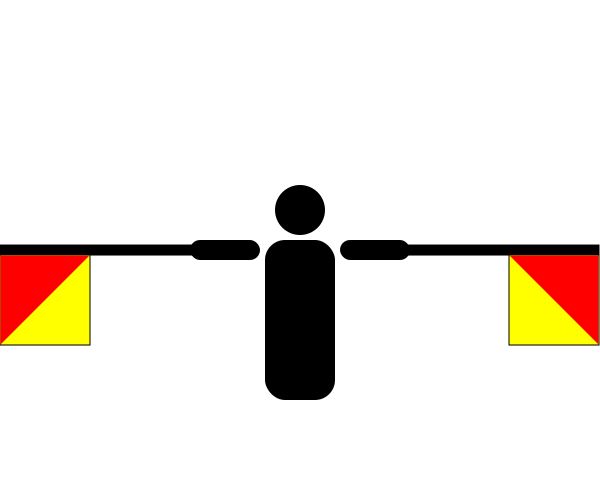
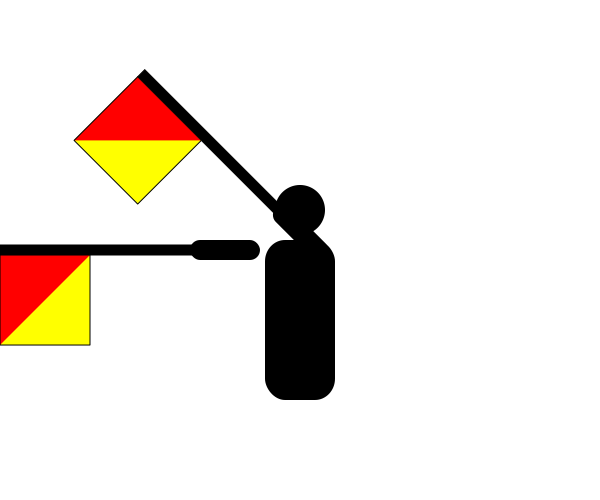
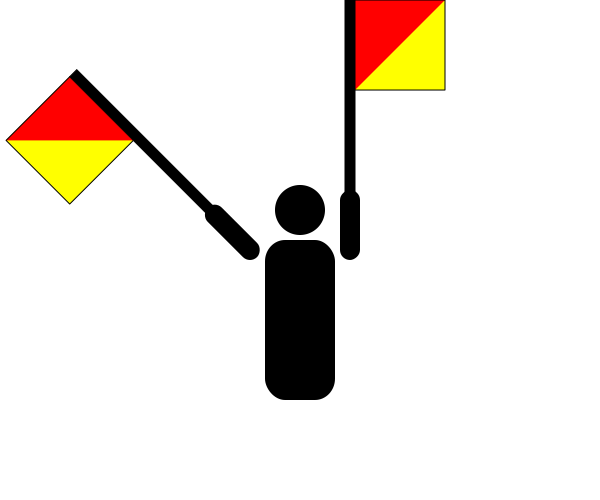
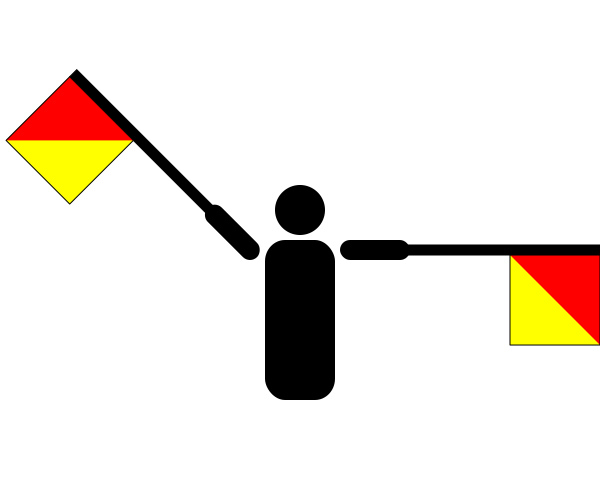
There are approximately 836 people named Crotty in the UK. That makes it roughly the 8,495th most common surname in Britain. Around 13 in a million people in Britain are named Crotty.
Origin: Celtic
Region of origin: British Isles
Country of origin: Ireland
Religion of origin: Christian
Language of origin: Gaelic