CORMACK
Cormack is a surname situated within the larger tradition of Gaelic and Celtic names that have flourished across the British Isles. The name is found prominently in Scotland and Ireland and is associated with the common Gaelic personal name Cormac.
In Gaelic Cormac is constructed from the elements corb and mac. The element corb can denote a chariot or, alternatively, a raven, while mac signifies “son”. Consequently, the surname Cormack can be interpreted as either “son of the charioteer” or “son of the raven”. Both identifications have been upheld by scholars familiar with early Gaelic linguistic usage.
The earliest surviving reference to the name appears in the Book of Deer, dated 1132, where it is recorded as Gillecrist MacCormaic. Over subsequent centuries the name evolved into a variety of orthographic forms, including MacCormac, MacCormack, McCormack, and McCormick, before ultimately stabilising as Cormack. These variations are typical of the way Gaelic patronymics were Anglicised during the Middle Ages.
Historical documents provide a snapshot of the name’s distribution. In Scotland, entries such as Gilbert McCormoc in the “Acts of the Lords of Council in Civil Causes” for the period 1478‑1495 and later, Gilbert M’Cormac of Barley in 1696, illustrate the name’s presence in southern and eastern Scotland. In Ireland, the surname was particularly common in Ulster, with records such as the marriage of Elizabeth McCormack to Wiliam Ritchie at Cupar, Fife on 12 April 1849, underscoring its cross‑island migration.
Today the concentration of the surname Cormack remains strong in Scotland, especially within Sutherland and Aberdeenshire, and in Ireland, where Tyrone has a higher density of bearers. The diaspora has carried the name to the United States, Canada, Australia and New Zealand, where it is recognised as a distinctly Celtic surname.
Related surnames that share the same Gaelic root include Cormac, Cormach, Cormick, McCormack, MacCormack, MacCormac, Cormich, Cormiche and, in some instances, Kormack. The common thread across these variants is the patronymic construction Mac Cormaic or its Anglicised counterpart, which continuously points back to the original meaning derived from Cormac.
The heritage of the surname Cormack is often symbolised in its family crests and coats of arms, which frequently feature elements associated with Gaelic warfare and chariots. This visual representation reinforces the historical significance of the name, linking present‑day bearers with the ancestral identity that the surname originally conveyed.
Typical given names associated with the Cormack surname
Male
- Alexander
- Andrew
- David
- George
- Ian
- James
- John
- Paul
- Peter
- Robert
- William
Female
- Adrianne
- Ann
- Anne
- Carol
- Catherine
- Elizabeth
- Helen
- Jennifer
- Julie
- Linda
- Margaret
- Mary
- Sarah
Similar and related surnames
Related and similar names are generated algorithmically based on the spelling, and may not necessarily share an etymology.
How to communicate the surname Cormack in...
Braille
⠉⠕⠗⠍⠁⠉⠅
Morse
-.-.---.-.--.--.-.-.-
Semaphore

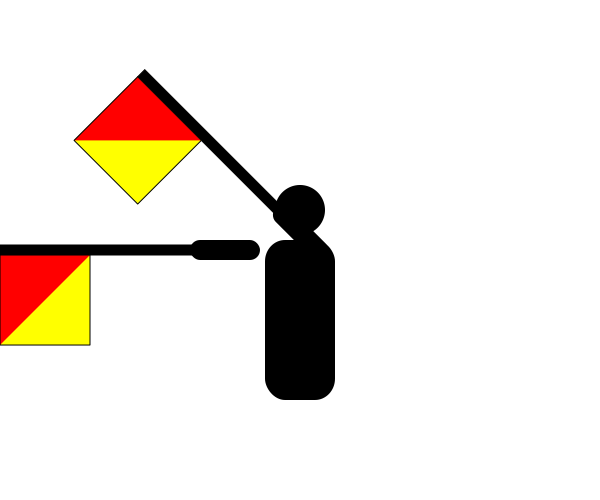
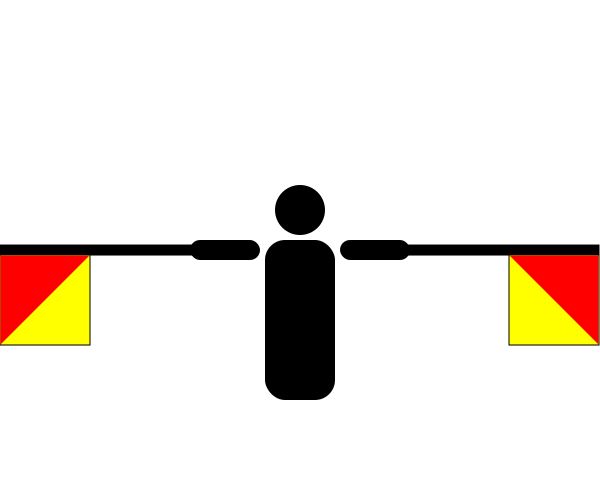
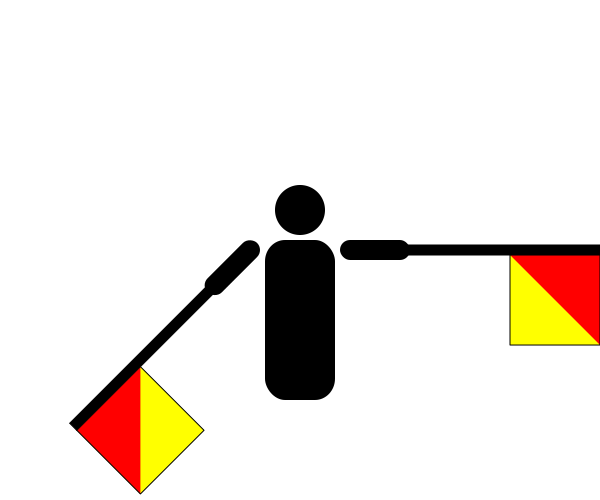

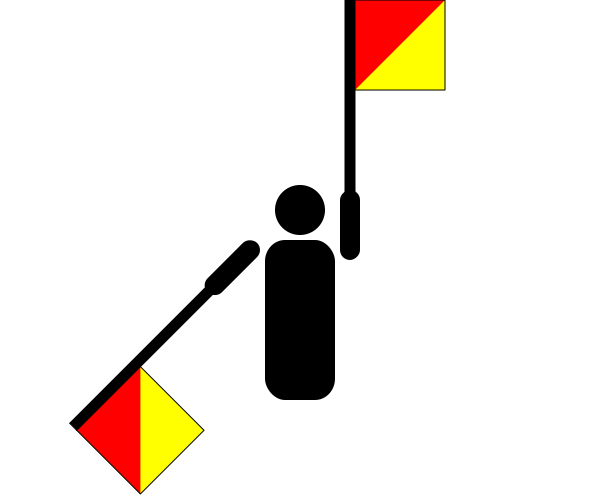
There are approximately 3,889 people named Cormack in the UK. That makes it roughly the 2,400th most common surname in Britain. Around 60 in a million people in Britain are named Cormack.
Surname type: From given name or forename
Origin: Celtic
Region of origin: British Isles
Country of origin: Scotland
Religion of origin: Christian
Language of origin: Gaelic

Famous people named Cormack
- Peter Cormack - Scottish football player and manager
- Robin Cormack - Art historian
- Patrick Cormack - Politician
- Ben Cormack - Novelist
- Paul Cormack - Cricketer
- Christian Cormack - Rower
- William Sloan Cormack - College leader and political activist (1898 to 1973)
- Magnus Cormack - Australian politician (1906 to 1994)
Names and descriptions courtesy of Wikipedia, and may contain errors. This is not intended to be an exhaustive list of every famous person with this name.