CORBITT
Corbitt is a surname of predominantly English origin, with roots that trace back to the Old French word corbet, meaning “raven.” It entered the English lexicon as a topographic surname, assigned to individuals dwelling near areas where ravens were plentiful, or as a descriptive nickname for those possessing raven‑like attributes such as dark hair or a dignified bearing.
The surname is recorded in a variety of forms, including Corbet, Corbett, Carbert, Corbert and Corburt. These orthographic differences arise from regional dialects, phonetic transcription and the conventions of clerical record‑keeping during the Middle Ages.
Historical documentation places the earliest confirmed use of the name in the year 1086, within the county of Shropshire in England, where an individual named Hugh Corbet is listed in the Domesday Book. This early entry suggests that the family settled in Britain alongside the Norman influence that followed the Conquest of 1066.
Subsequent genealogical traces indicate that Sir Richard Corbet, a descendant of the original Hugh, was granted lands in Scotland, leading to the establishment of Corbitt lineages in the regions of Teviotdale and the manor of Malcarvestum. These figures are also cited in parish registers of London, where baptisms and marriages involving Corbitt family members are recorded in the seventeenth and eighteenth centuries.
In addition to its English provenance, the surname Corbitt appears in Irish sources derived from the Gaelic Ó Corbáin, which translates as “descendant of Corbán.” The personal name Corbán itself incorporates elements that denote “raven” and “little,” rendering the meaning “little raven.” Irish mythology traditionally regards the raven as a symbol of wisdom, thereby implying that the bearer of the name might have been viewed as particularly astute.
Parallel accounts also propose a Norse origin for the name, combining the personal name Kori with the element biotr, meaning “hermitage” or “dwelling.” This interpretation, found in medieval ecclesiastical records, suggests a locational surname for individuals residing near a hermit’s cell or secluded abode. However, unlike the French and Gaelic attestations, this Norse hypothesis is less widely corroborated by surviving documentation.
In modern times, the surname remains relatively uncommon within the United Kingdom, appearing sporadically across England and Scotland. In contrast, the United States hosts a larger population of families bearing the name, particularly in the southern states of Georgia and North Carolina, as recorded in the 1920 Census. Canadian, Australian and New Zealand occurrences are attributed largely to historical emigration patterns from the British Isles.
Collectively, the evidence from contemporary records supports the conclusion that Corbitt has a multifaceted heritage, encompassing Old French linguistic roots, Norman settlement in England, and Gaelic influences in Ireland, with later migratory movements spreading the name to North America and other former British colonies. The surname’s enduring presence across these regions attests to its resilience and adaptability over the centuries.
Typical given names associated with the Corbitt surname
Male
- Andrew
- Barrie
- Barry
- Christopher
- David
- Douglas
- James
- Mark
- Peter
- Simon
- Trevor
Female
- Alison
- Amanda
- Claire
- Dawn
- Eileen
- Elizabeth
- Emma
- Jemma
- Kathleen
- Lilian
- Margaret
- Marie
- Patricia
Similar and related surnames
Related and similar names are generated algorithmically based on the spelling, and may not necessarily share an etymology.
How to communicate the surname Corbitt in...
Braille
⠉⠕⠗⠃⠊⠞⠞
Morse
-.-.---.-.-.....--
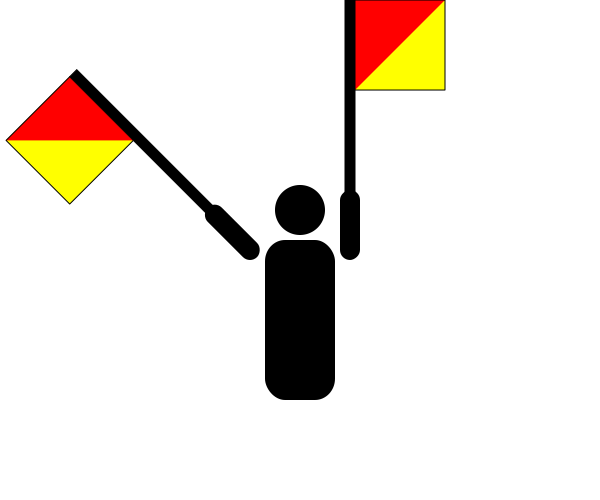
Semaphore

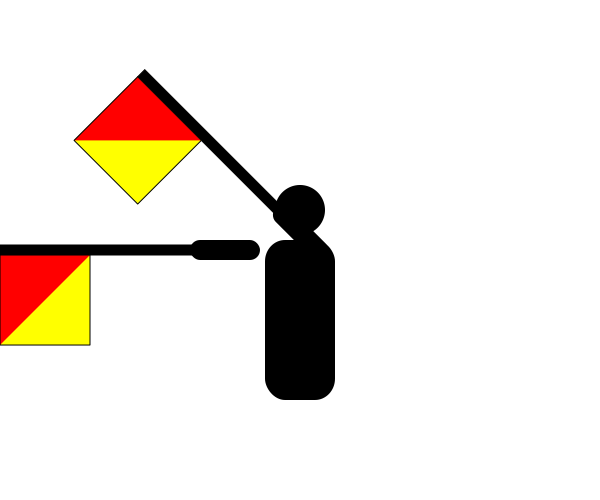
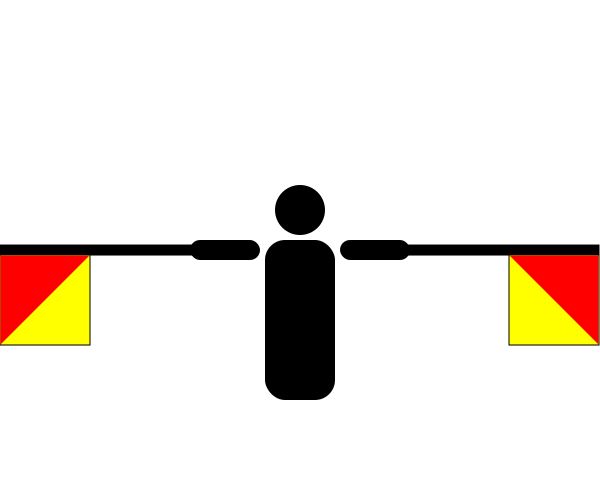
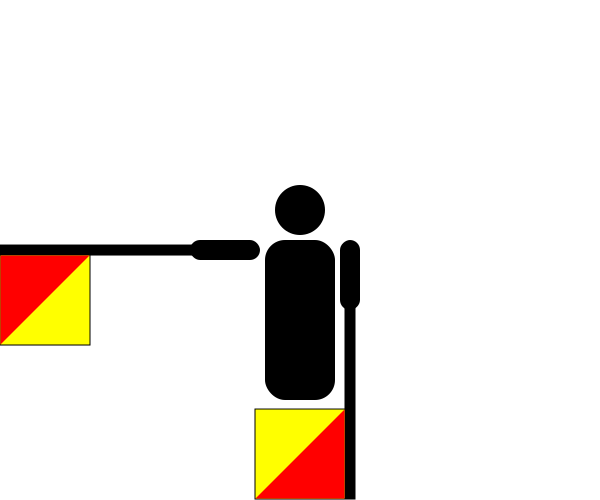
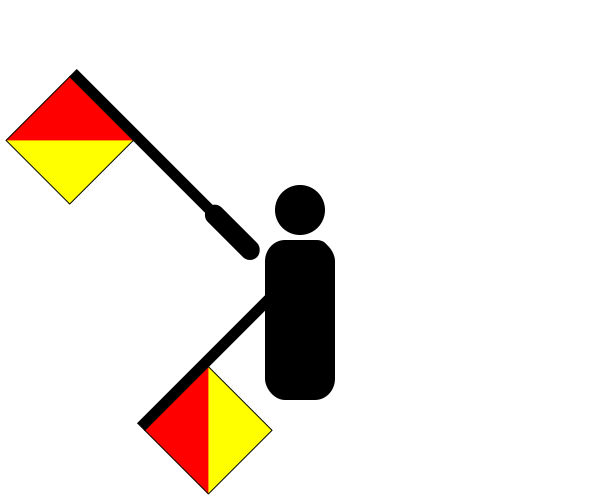
There are approximately 201 people named Corbitt in the UK. That makes it one of Britain's least common surnames. Only around three in a million people in Britain are named Corbitt.
Origin: English
Region of origin: British Isles
Country of origin: England
Religion of origin: Christian
Language of origin: English
