COMISKEY
The surname Comiskey originates from the Gaelic culture of the island of Ireland, an element that is echoed in its linguistic and historical roots. Its presence is firmly situated within the British Isles, with the most significant concentration in the country of Ireland where it has been a common family name for centuries.
Originally recorded in the early medieval period as Mac Cumascaigh, the name was translated from the Old Gaelic personal name Cumascach which means “powerful”, a reference to both mental and physical strength. The earliest surviving reference is that of Teag Mac Cumascaigh dated to the year 1000 a.d. in the annals of Clones, County Monaghan, during the reign of Brian Boru, High King of Ireland. The surname evolved over time, giving rise to a number of Anglicised forms including MacComiskey, MacCumisky, MacCumesky, and shortened variants such as McComiskey and Comiskey.
In the 10th century and thereafter the sept associated with the name resettled from its original stronghold in Clones to neighbouring counties of Cavan, Longford and Westmeath. The name appears frequently in the Hearth Money Rolls of County Monaghan, dated 1664‑1666, under the spelling McComiskie, and a Roger Commoskey of Dundalk is noted on an army list from the same century. The modern form Comiskey is therefore rooted in a long and documented lineage that extends back well over a millennium.
An alternative derivation for the same surname is found in the Gaelic word comhsaic, meaning “sharing”. This meaning gained renewed prominence in the early 20th century through the American Major League baseball executive Charles Comiskey, who owned the Chicago White Sox from 1900 to 1931 and for whom Comiskey Park was named in 1910. The association of the name with the sport reflects a spirit of partnership and common purpose that resonated with the broader cultural view of the name as one of cooperation and unity.
The surname is also considered to be the Anglicised form of the Irish name Ó Coimsic, which itself is derived from cóm iscigh meaning “from the steep ridge”. This particular form of the surname is predominantly found in the southern regions of Ireland, especially in the counties of Limerick and Cork. Families bearing the name in its various forms remain distributed across both urban and rural areas throughout the country.
In contemporary times, the name Comiskey can be found within Irish diaspora communities in the United Kingdom, United States, Canada and Australia. It is common in the United States in regions with substantial Irish heritage, including the mid‑Atlantic, the Northeast, the Midwest, the South and the West Coast. In Europe, pockets of the surname exist in France, the Netherlands and other northern European nations where significant Irish ancestry is present.
A range of spelling variants and related family names share a common origin with Comiskey. These include Comisky, Comiske, Cumisky, and the Anglicised iteration Comerford, which derives from the Gaelic Ó Comhdhaidh meaning “warlike”. The surname’s historical richness is further evident in its use across varied fields in modern times, from sports to politics to business, preserving its legacy as one of the oldest families within Ireland, still held in reverence today.
Typical given names associated with the Comiskey surname
Male
- Adam
- Anthony
- David
- Gary
- James
- John
- Mark
- Patrick
- Paul
- Peter
- Sean
- William
Female
- Alison
- Anne
- Claire
- Elaine
- Kathleen
- Lorraine
- Margaret
- Mary
- Michelle
- Patricia
- Sharon
- Shauna
- Susan
Similar and related surnames
Related and similar names are generated algorithmically based on the spelling, and may not necessarily share an etymology.
How to communicate the surname Comiskey in...
Braille
⠉⠕⠍⠊⠎⠅⠑⠽
Morse
-.-.-----.....-.-.-.--
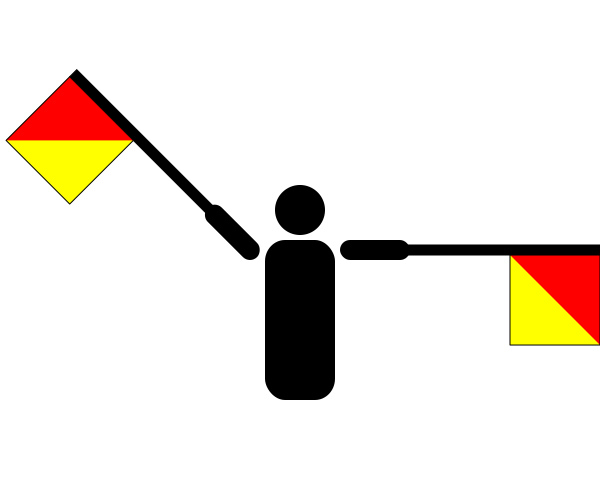
Semaphore

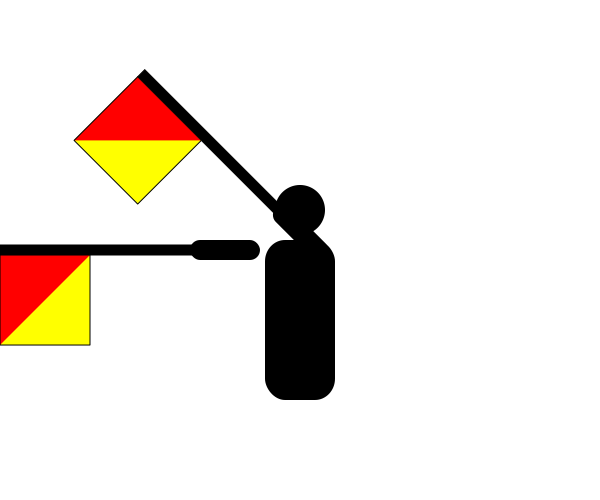
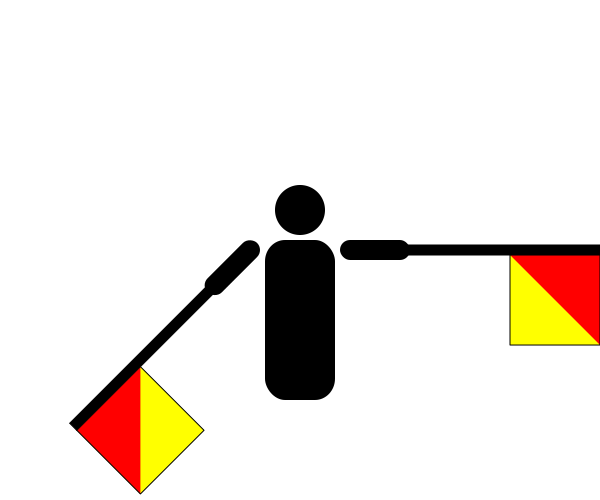
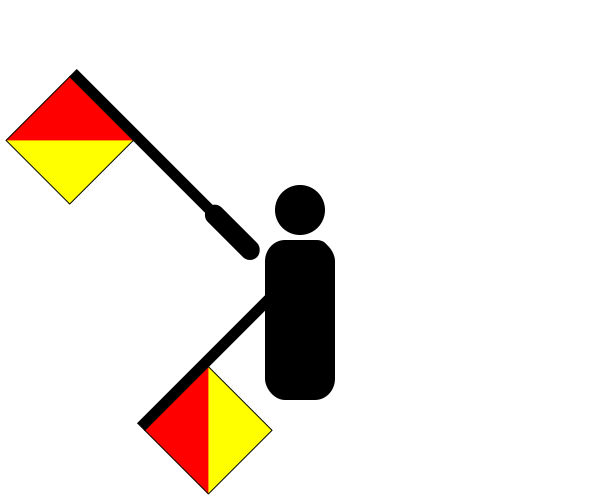

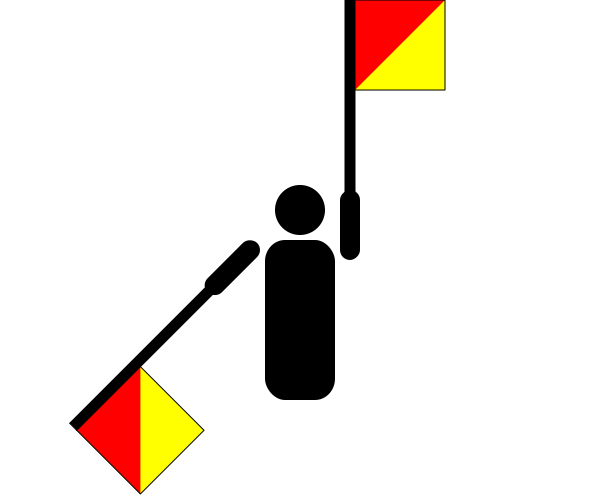

There are approximately 410 people named Comiskey in the UK. That makes it one of Britain's least common surnames. Only around six in a million people in Britain are named Comiskey.
Surname type: From given name or forename
Origin: Celtic
Region of origin: British Isles
Country of origin: Ireland
Religion of origin: Christian
Language of origin: Gaelic
