CARMEN
Carmen is a surname that carries a confluence of linguistic and cultural origins. It has roots in Latin, where the word carmen means “song” or “poem,” and in Spanish, where it is associated with the Virgin Mary under the appellation Virgen del Carmen and with the Carmelite Order that historically settled on Mount Carmel in Israel.
In the medieval period the surname appeared within the British Isles, particularly in England. Early documentary evidence such as the 1184 Pipe Rolls of Leicester records a person named Robert Karleman, while the Hundred Rolls of 1275 document Henry Carman of Suffolk and Robert Carleman in Cambridgeshire. These references indicate that the name was in use in England prior to the widespread adoption of fixed surnames following the Norman Conquest.
While the English spelling variations that evolved into Carman or Carmane are sometimes linked to Anglo‑Saxon personal names such as Karlmann or Jarlmann, the spelling Carmen itself reflects a distinct lineage derived from the Latin sense of the word. The earliest recorded use in England as shown above demonstrates that the name retained its Latin form rather than adopting the Germanic or English variants that later dominated the Anglo‑Saxon surname corpus.
The recurrence of the name in medieval England may also reflect the influence of ecclesiastical patronage. The association of carmen with religious devotion—through the Virgin Mary’s title and the Carmelite monastic community—would have favoured its adoption among Christian families seeking to express piety or connection to sacred office.
Geographically, the cultural transmission of the surname to England coincided with the broader movement of Spanish colonisation and migration in later centuries, which is reflected in the modern concentration of people with the surname in the United States, particularly in the Northeast. In Spain and select South American nations, the surname remains common, often appearing in double surnames such as Perez del Carmen or Gutierrez del Carmen due to Spanish naming conventions that combine patronymic and locative elements.
The etymological link to the Latin for “song” and the Hebrew translation of Carmel as “garden” or “vineyard” suggests that individuals who carried the name might originally have been chroniclers of music, poets, or caretakers of gardens or vineyards. The name’s resonance with artistic and agrarian contexts provided a fertile ground for its persistence through generations.
In heraldic tradition, families bearing a variation of the name such as Roberts Karleman were granted a coat of arms described as a gold field charged with three ravens, symbolising wisdom and a connection to the bardic heritage suggested by the surname’s origin.
Overall, the surname Carmen exemplifies a multifaceted heritage that bridges Latin, Spanish, and English linguistic traditions, while embodying cultural associations with music, poetry, gardening, and religious devotion. Its documented presence from the 12th century in England to contemporary global distribution demonstrates its enduring appeal and adaptability across diverse societies.
Typical given names associated with the Carmen surname
Male
- Anderw
- Daniel
- Gary
- Huseyin
- James
- John
- Lee
- Michael
- Owen
- Paul
- Robert
- Roy
- Stephen
- Wilson
Female
- Amanda
- Cercel
- Deborah
- Esther
- Hannah
- Ingrid
- Jade
- Jennifer
- Lisa
- Margaret
- Maria
- Rachel
- Vera
- Wendy
Similar and related surnames
Related and similar names are generated algorithmically based on the spelling, and may not necessarily share an etymology.
How to communicate the surname Carmen in...
Braille
⠉⠁⠗⠍⠑⠝
Morse
-.-..-.-.--.-.
Semaphore


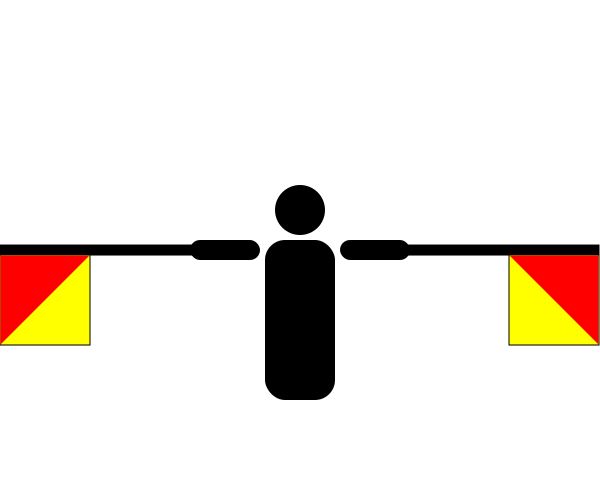
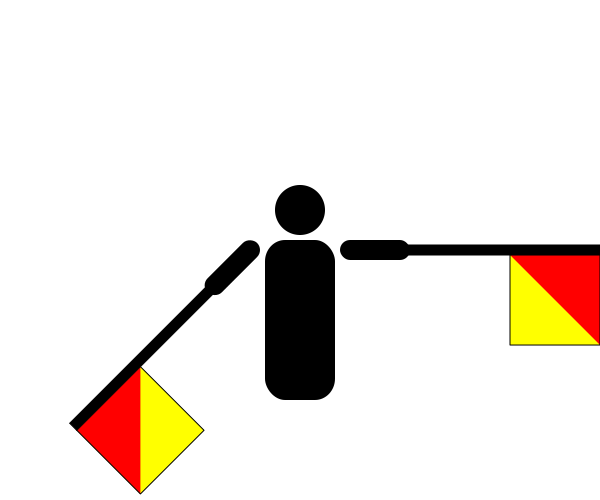

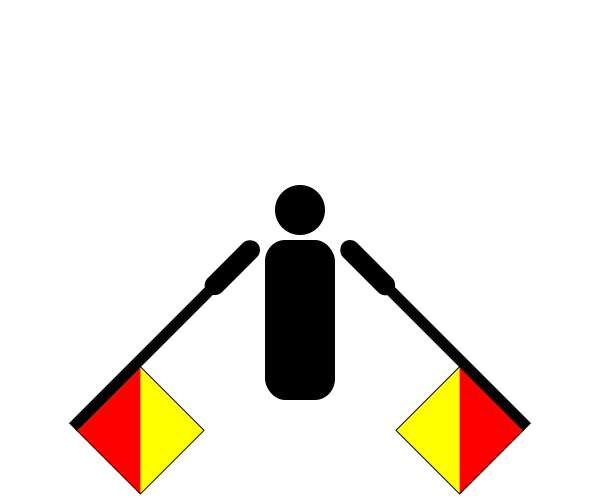
There are approximately 212 people named Carmen in the UK. That makes it one of Britain's least common surnames. Only around three in a million people in Britain are named Carmen.
Surname type: From given name or forename
Origin: English
Region of origin: British Isles
Country of origin: England
Religion of origin: Christian
Language of origin: English
