CANNY
Canny is a surname of both English and Scottish provenance, with roots that extend into the Gaelic traditions of the British Isles. It is borne by families in several countries and has a rich linguistic and historical background.
The English origin of the name derives from Middle English canny, a word meaning “clever” or “shrewd.” As a surname it likely began as a nickname applied to a person noted for astuteness or cleverness. Over centuries it became hereditary and has spread throughout English‑speaking societies.
In Gaelic contexts, the surname is an anglicised form of several distinct names. One source references the Gaelic name MacCanna, wherein the prefix mac means “son of” and the personal nickname cánóg refers to a “wolf cub.” The clan so named once held lordship over the area of Clanbraasil on the southern shores of Lough Neagh in County Armagh; the first recorded bearer died in the 12th century. A second Gaelic origin is the surname Ó Cannaidh, meaning “valiant” or “wise.” This form is historically linked to the medieval kingdom of Uí Dunchada, now County Monaghan.
Historical records provide evidence of the name in the 12th and 16th centuries. Donnell MacCanna served as chief of Clanbrassil in 1598. In 1599 the marriage of Mary McCann and Michael Rilie is documented in Adamstown, Co. Wexford. The 19th‑century poet Michael Joseph MacCann (1824‑1883) is noted for the celebrated poem “O' Donnell Abu.” A family member christened Charles Canny on 17 September 1704 at St. Botolph without Aldesgate, London, demonstrates the name’s presence in England. The earliest known spelling appears in the Annals of the Four Masters, where an Amhlaibh Mac Canna is described as a “pillar of chivalry and vigour” in 1155.
The heraldic symbol associated with the Canny name features two golden boars facing one another, surrounded by eight seven‑pointed stars. This crest is distinctive and recognisable in the study of family coats of arms.
Today the surname is most common in the United Kingdom, Ireland, the United States and Australia. Within the UK it is particularly frequent in Scotland, especially Glasgow, and in Ireland it is seen mainly in County Mayo. In the United States the name appears often in Pennsylvania and New Jersey, while in Australia it is most common in New South Wales and Victoria.
The name Canny is associated in historical texts with attributes of intelligence, wisdom and bravery. Reported qualities include resourcefulness, courage and loyalty. While it is traditionally a surname, it has occasionally been employed as a given name. Observed patterns suggest that bearers of the name often share a reputation for cleverness and determination, reflecting the etymological roots of the word in both English and Gaelic. The name continues to signify a legacy of strength and integrity across generations.
Typical given names associated with the Canny surname
Male
- Brian
- James
- Jason
- John
- Joseph
- Liam
- Michael
- Patrick
- Paul
- Sean
- Stephen
- Thomas
Female
- Anne
- Belinda
- Emily
- Fiona
- Jacqueline
- Janet
- Karen
- Louise
- Margaret
- Mary
- Patricia
- Sinead
Similar and related surnames
- Caney
- Cagney
- Cani
- Can
- Cahn
- Cane
- Caan
- Cain
- Cainey
- Cainn
- Canay
- Canie
- Cann
- Canna
- Cagnay
- Cagni
- Caheny
- Cangney
- Canies
- Canin
- Canis
- Cannah
- Cannay
- Canne
- Cannee
- Cannes
- Cannew
- Canney
- Cannie
- Cannin
- Cannis
- Cannow
- Canns
- Canoy
- Cany
- Cayne
- Cayney
- Coaney
- Coenye
- Cogney
- Cogny
- Conay
- Coney
- Connay
- Conney
- Connoy
- Conny
- Conoy
- Conwy
- Cony
- Coonay
- Cooney
- Coony
- Couney
- Cowney
- Coyney
- Cugny
- Cuney
- Cunney
- Cunny
- Cuny
- Gainey
- Gainy
- Ganay
- Ganey
- Ganiyu
- Ganney
- Ganny
- Gany
- Ganya
- Ganyo
- Ghanney
- Ghany
- Ghunney
- Goney
- Gony
- Gonye
- Gonyou
- Gooney
- Gouny
- Gowney
- Guineay
- Guiney
- Guinney
- Gunay
- Guney
- Guneyi
- Gunney
- Gunny
- Guny
- Kahney
- Kainey
- Kanaiya
- Kanay
- Kanaya
- Kaney
- Kany
- Kanya
- Kanye
- Kanyi
- Kanyo
- Keaney
- Keanny
- Keany
- Keenay
- Keeney
- Keenoy
- Keeny
- Keiney
- Kenawy
- Keney
- Kennay
- Kenneoy
- Kenney
- Kennoy
- Kenny
- Kennys
- Keny
- Kenya
- Kenyi
- Kewney
- Khany
- Khanye
- Kiany
- Kienney
- Kinay
- Kiney
- Kinnay
- Kinney
- Kinny
- Kiny
- Kinya
- Kinyua
- Koney
- Konney
- Konya
- Konye
- Kooney
- Kuney
- Kunuyi
- Kunya
- Queeney
- Queeny
- Quiney
- Quinnay
- Quinney
- Quinny
- Quiny
- Quney
Related and similar names are generated algorithmically based on the spelling, and may not necessarily share an etymology.
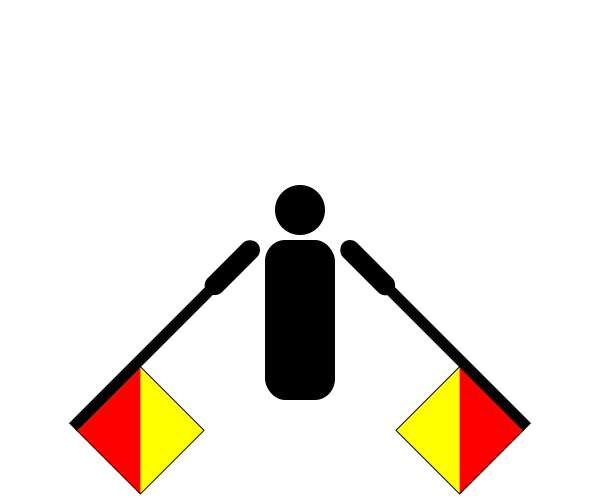
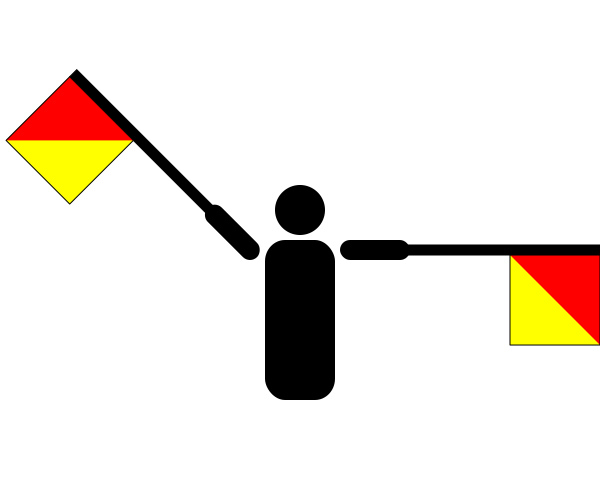
How to communicate the surname Canny in...
Braille
⠉⠁⠝⠝⠽
Morse
-.-..--.-.-.--
Semaphore


There are approximately 309 people named Canny in the UK. That makes it one of Britain's least common surnames. Only around five in a million people in Britain are named Canny.
Origin: Celtic
Region of origin: British Isles
Country of origin: Ireland
Religion of origin: Christian
Language of origin: Gaelic