BRANTON
Branton is an English locational surname that finds its roots in the British Isles, specifically within the country of England. The name is historically associated with the Christian tradition and has been documented in various medieval records.
The etymological construction of Branton combines the Old English personal name Brand or Bran with the suffix -ton, which denotes a settlement or enclosure. Consequently, the surname may be interpreted as "the settlement belonging to Brand or Bran".
Beyond this personal‑name derivation, the name is also geographically derived from several places named Branton scattered across northern England and Devon. One such location lies near Wooler in Northumberland, documented as Bremetona around 1150 and Bremtun in the Book of Fees for Northumberland dated 1236. These early forms reflect a combination of the pre‑7th‑century Old English word bremen, meaning broomy, and tun, indicating an enclosure or settlement; hence the interpretation "enclosure where broom grew".
The second Anglo‑Saxon place bears the name of Branton in the West Riding of Yorkshire, appearing as Brantune in the Domesday Book of 1086 and later as Bramton in the 1240 Feet of Fines for that county. Its initial element derives from brom, the Old English word for broom, paired again with tun.
A third place contributing to the surname is Braunton in Devonshire, recorded as Brantona in the Domesday Book and later as Bramtona in 1169. This location shares the same broom‑based etymology, linking it by feature to the Northumberland and Yorkshire sites.
Locational surnames such as Branton originally served to identify landowners or lords of a manor, particularly for those who migrated from their birthplace. Historical documentation confirms this pattern: in the Poll Tax Returns of Yorkshire in 1379, a Johannes Branton is listed, and on 28th April 1539, the birth of Alse Branton was recorded at Northam in Devonshire.
The earliest recorded spelling of the family name appears within the “Pipe Rolls of Northamptonshire” in 1162, where a Ralph de Branton is documented during the reign of King Henry 11, known as “The Builder of Churches”. This provides a definitive cornerstone for the surname’s antiquity.
The familial Coat of Arms associated with Branton consists of a silver cross set between four gold mullets on a black field, edged with a red bordure. This heraldic description is officially recognised and forms part of the historical identity of the Branton lineage.
Typical given names associated with the Branton surname
Male
- Andrew
- David
- Derek
- James
- John
- Jonathan
- Matthew
- Michael
- Peter
- Philip
- Raymond
- Richard
- Robert
- Thomas
- Timothy
Female
- Alison
- Christine
- Clare
- Denise
- Elizabeth
- Helen
- Julie
- Lianne
- Margaret
- Rebecca
- Sarah
- Victoria
Similar and related surnames
- Barnton
- Bernton
- Braint
- Brainton
- Bralton
- Bramton
- Brandon
- Brandt
- Branon
- Branston
- Brant
- Brante
- Branten
- Brantom
- Brants
- Braton
- Braunton
- Braynt
- Brentano
- Brenton
- Brentson
- Brianton
- Brinton
- Bronton
- Brownton
- Brunton
- Bryanton
- Bryenton
- Brynton
- Burnton
- Baunton
- Braginton
- Brandts
- Brankston
- Branth
- Brantigan
- Brantuo
- Breant
- Barnden
- Brannon
- Brayton
- Brendon
Related and similar names are generated algorithmically based on the spelling, and may not necessarily share an etymology.
How to communicate the surname Branton in...
Braille
⠃⠗⠁⠝⠞⠕⠝
Morse
-....-..--.-----.
Semaphore
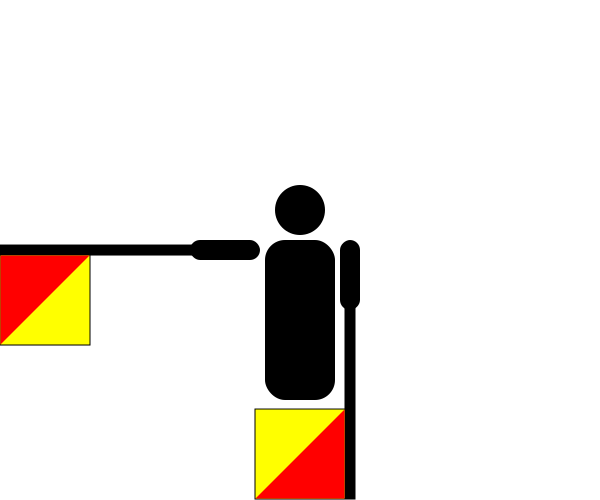
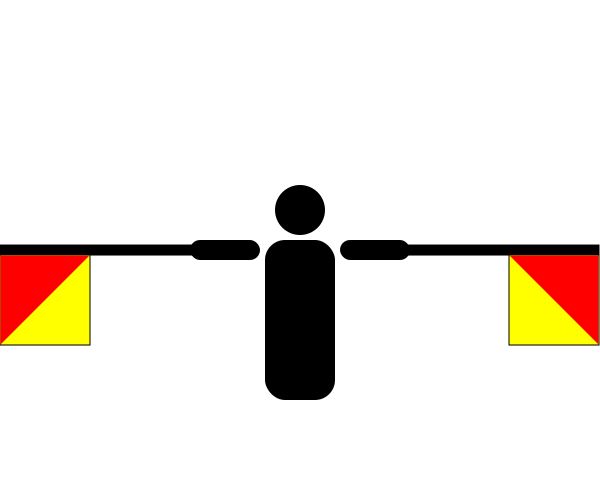

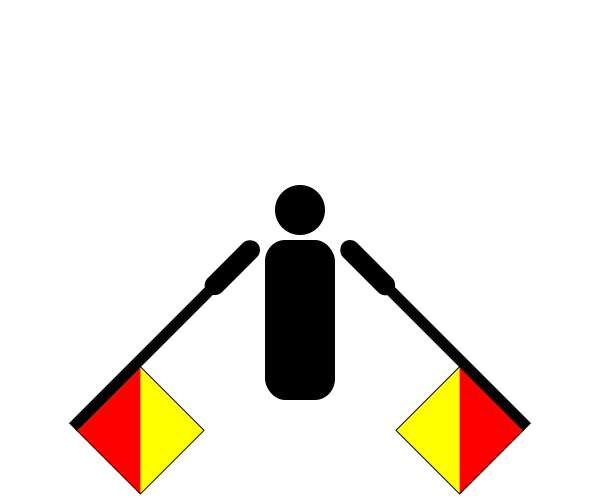
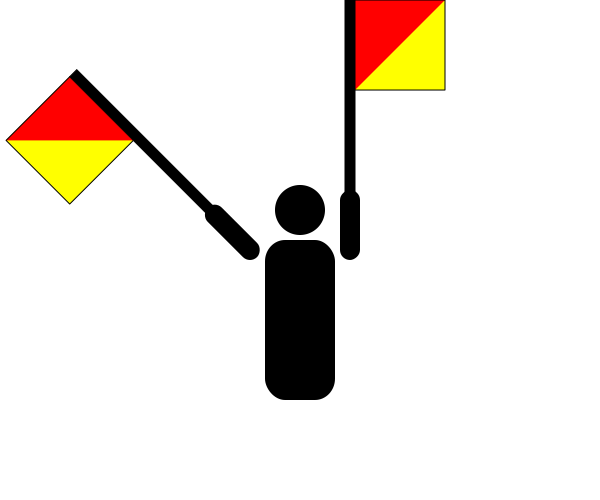
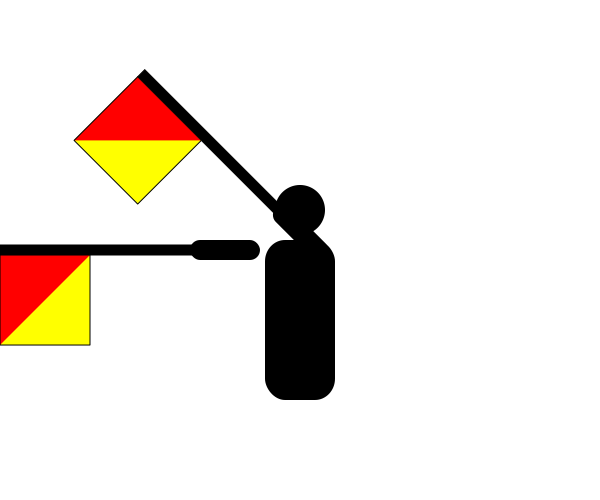
There are approximately 1,022 people named Branton in the UK. That makes it roughly the 7,251st most common surname in Britain. Around 16 in a million people in Britain are named Branton.
Surname type: Location or geographical feature
Origin: English
Region of origin: British Isles
Country of origin: England
Religion of origin: Christian
Language of origin: English
