BRABANT
Brabant is a surname of Dutch origin, derived from the historic region of Brabant in present‑day Belgium and the Netherlands. It is a locational name, indicating that the original bearer originated from or was associated with the Duchy of Brabant.
The Duchy of Brabant was a medieval sovereign state in West Europe. In 1830, following the independence of Belgium, the territory of the former duchy was divided: the southern area became the Belgian provinces of Antwerp and Brabant, while the northern part formed the Dutch province of North Brabant. The name Brabant thus remains closely tied to these regions.
In addition to its Dutch roots, the surname is also linked to Old French and Celtic linguistic influences. The Old French term *brabant* is thought to mean "swivel plough", a farming implement that was common in the region. Celtic scholars suggest that the word may derive from *Brabo*, meaning "fighter" or "warrior". Over time, these terms were anglicised and the resulting surname became Brabant.
The first known spelling of the family name is that of Richard Braban, dated 1260 and recorded in the Assize Court Rolls of Cambridgeshire during the reign of King Henry XI. Other early records include Heliseus de Brabayn in the Hundred Rolls of Lincolnshire (1275), John Braton in the 1296 Subsidy Rolls of Sussex, and Richard Brabyn, a Freeman of Yorkshire in 1549.
Over the centuries the spelling of the surname has varied widely. Common variants include Braban, Brabyn, Brabban, Brabben, Brabbins, Brabham, Brabon and Brabentz. These differences reflect regional dialects and the gradual standardisation of spelling in English and Dutch documents.
In contemporary times the surname is most frequently encountered in Belgium, particularly within the province of Flemish Brabant where it is one of the top fifty most common surnames, with an estimated more than 100 000 bearers. In the Netherlands the name is the forty‑first most common, with over 10 000 bearers, chiefly in North Brabant. The surname is also present in France (especially in the Nord‑Pas‑de‑Calais area), in the United Kingdom, and in countries such as Canada (notably Quebec), South Africa, Australia and New Zealand, where it was introduced by immigrants in the 17th and 19th centuries.
A coat‑of‑arms granted to the Brabant family depicts a silver shield with a red fesse humettee bearing three gold leopards’ faces. This heraldic device has been used by several branches of the family and is recognised in both Dutch and English traditions.
The surname Brabant therefore embodies a rich cultural heritage that spans several linguistic traditions, medieval history, and modern demographics. It is a name that continues to signify regional identity, loyalty, and strength in the communities where it remains common.
Typical given names associated with the Brabant surname
Male
Female
Similar and related surnames
Related and similar names are generated algorithmically based on the spelling, and may not necessarily share an etymology.
How to communicate the surname Brabant in...
Braille
⠃⠗⠁⠃⠁⠝⠞
Morse
-....-..--....--.-
Semaphore
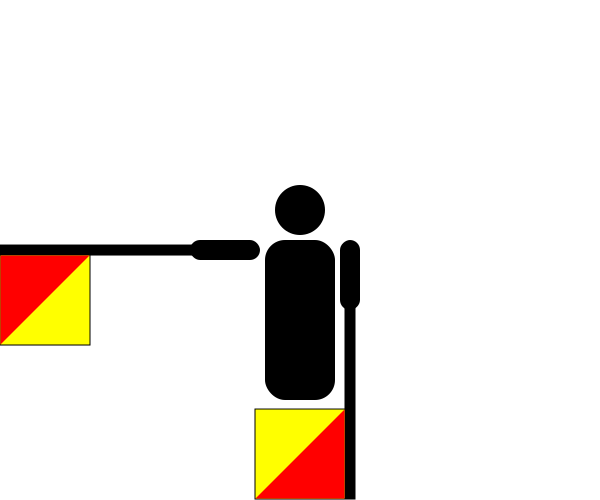
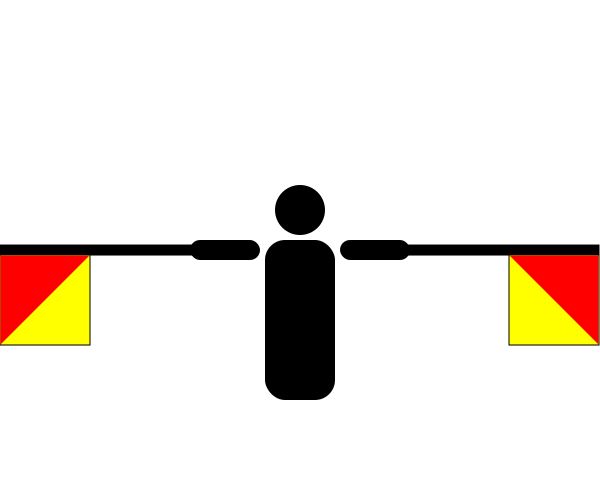

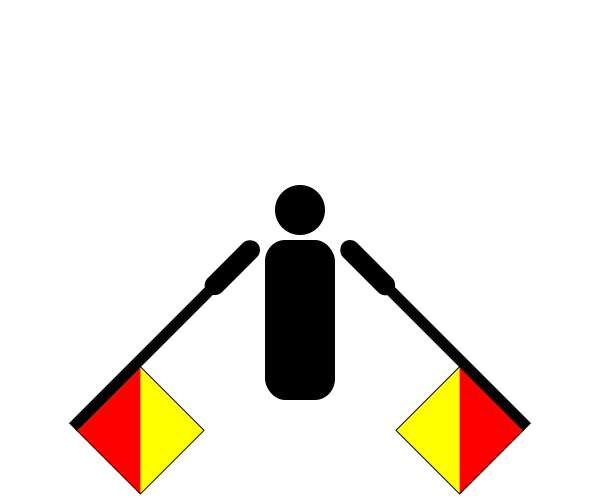
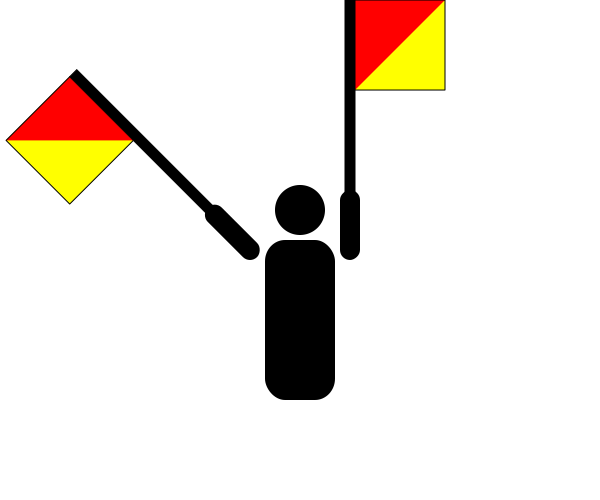
There are approximately 72 people named Brabant in the UK. That makes it one of Britain's least common surnames. Only around one in a million people in Britain are named Brabant.
Origin: English
Region of origin: British Isles
Country of origin: England
Religion of origin: Christian
Language of origin: English