BOWNE
Bowne is a surname of English origin. It has been in use since the early medieval period and is recorded in several historic documents across the United Kingdom.
The earliest recorded form of the name appears in the Bynames of Kent, where Godric aet Burnan is dated to 1044, during the reign of King Edward the Confessor. This evidence indicates that the surname was already in use in the north of England by the mid‑11th century.
One common derivation of the surname is from the Old‑English word bune, meaning “a bean.” In the medieval period, this term was employed as an occupational surname or nickname for individuals who cultivated or traded beans. The occupational nature of the name is supported by its persistence as a hereditary surname in later generations.
Another plausible origin relates to the Old‑English word burna or burne, which means spring or stream. In the south of England, the word evolved into broc (brook) and was used to describe a stream that flowed only in winter. In the north it remained as burn. The surname may therefore have been topographical, applied to people who lived beside such a watercourse. Variants that support this derivation include Bown(e), Burn(e), Burns, Born(e), Boorne, and Burner.
A further source explains that the name originates from Staffordshire and is derived from bune in the sense of “reed” or “tub.” This interpretation suggests that earlier bearers of the name may have manufactured vessels such as barrels or lived in an area where reeds were abundant. The surname also appears as a habitational name from the place of Bowness in Cumbria, from Old Norse bogi or “bow” and nes “headland,” giving rise to additional variants such as Bown, Bowness, and others.
Spelling variations of the surname include Bown, Bowan, Bowen, Bowin, Bowing, Bowning, and occasionally Boon or Boone. Some scholars posit a connection with an Old‑English personal name, Buna, which could account for the separate but similar surnames found in the same regions.
Historical record of the surname extends into the 17th century, for example the marriage of Thomas Burn and Jaine Rimur in Kirklington on 5 November 1659. In the 14th to 15th centuries, the name appears in the Subsidy Rolls of Yorkshire, with an entry for Adam le Bon dated around 1260 in the reign of King Henry III.
In the 17th and 18th centuries, individuals bearing the surname made notable contributions to society. John Bowne built a house in 1661 that later became the Bowne House museum in Queens, New York, celebrating his support for religious liberty. Robert Bowne was a philanthropist and businessman whose legacy is still remembered. Mary Bowne is historically significant for refusing to take an oath required of Quakers in 1662, an act that challenged restrictive legislation of the time. The family’s influence was such that Street in Flushing, New York, bears the name Bowne, reflecting the early settlements of this family in America.
In contemporary times, the surname is relatively rare. In the United Kingdom it remains uncommon, while in the United States it is most frequently found in New Jersey and New York, where descendants of early colonists settled. The Bowne House, and other historic sites associated with the family, continue to be preserved as reminders of the surname’s impact on religious and civil history.
Typical given names associated with the Bowne surname
Male
- Anthony
- Bradley
- Peter
Female
Similar and related surnames
Related and similar names are generated algorithmically based on the spelling, and may not necessarily share an etymology.
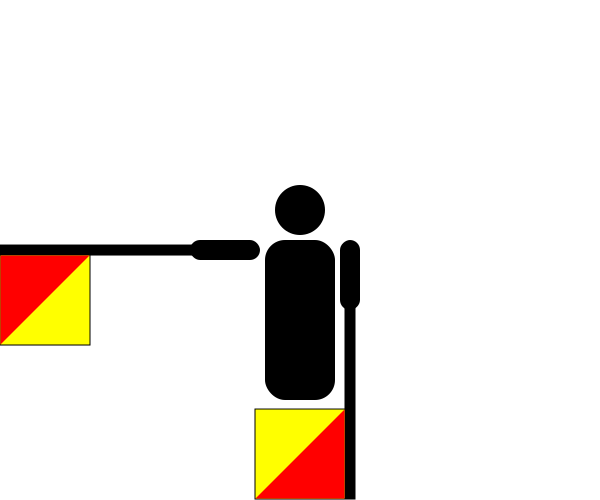
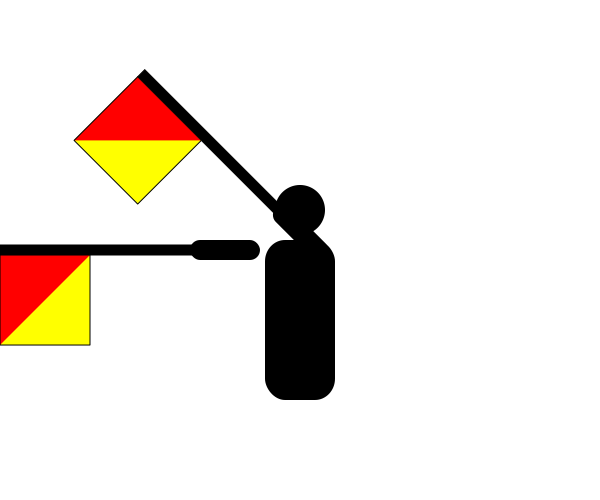
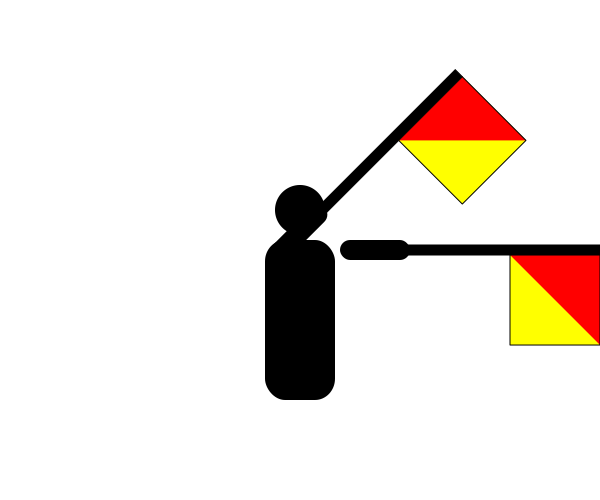
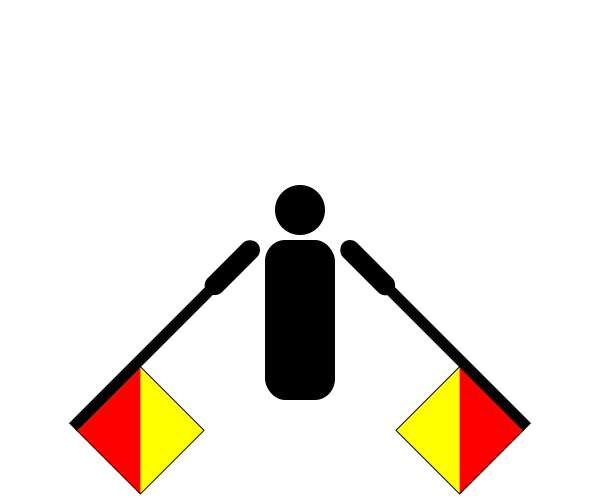
How to communicate the surname Bowne in...
Braille
⠃⠕⠺⠝⠑
Morse
-...---.---..
Semaphore

There are approximately 26 people named Bowne in the UK. That makes it one of Britain's least common surnames. Fewer than one in a million people in Britain are named Bowne.
