BONNAR
The surname Bonnar is traditionally regarded as a patronymic name of Irish origin, derived from the Gaelic family name Ó Buanáin which indicates descent from an individual known by the personal name Buanán.
The personal name Buanán is believed to be rooted in the Gaelic word buana, which means “victorious” or “triumphant”. Consequently, the surname Bonnar would have originally identified a descendant of an ancestor who was celebrated for his triumphal character.
Alternative etymological traditions suggest that the name may also have a distinct Old French provenance. The Old French term bonnaire originates from the phrase de bon aire, meaning “of good bearing or appearance”. The word was assimilated into Middle English as boner(e) or bonour to denote a person who displayed gentility, courtesy and handsomeness, and it was subsequently adopted as a nickname. Evidence of this version of the name appears in both England and Scotland, including the earliest Scottish record of a Thomas Boner as a charter witness in Aberdeen in the year 1281.
In the Irish context of County Donegal, the surname may also represent an anglicised form of the Gaelic patronym O'Cnaimshige, which translates to “descendant of Cnaimhseach”. The byname Cnaimhseach itself means “midwife”, indicating a possible occupational origin for this particular branch.
A third conjecture associates the name with a Welsh origin, where it appears as an Anglicised form of the patronymic ab Ynyr, meaning “son of Ynyr”. The personal name Ynyr is derived from the Latin Honorius, conveying the sense of being honoured. Variant spellings of the surname emerging from these sources include Bonnaire, Bonar, Bonner and Bonnor.
The earliest recorded spelling of the family name outside Scotland records the name John Boneyre in a chronicle dated to the year 1250, found in the Chartulary of the Monastery of Ramsey, Huntingdonshire, during the reign of King Henry I. An early heraldic description of the family’s arms shows a field divided paly of six into gold and red, with a blue chief bearing three gold lions rampant, symbolising martial prowess and nobility. The migration of bearers of the surname to the Americas is recorded with the arrival of a James Bonner in Virginia in the year 1623 aboard the ship Truelove.
In summation, the surname Bonnar is most commonly traced to an Irish Gaelic origin, signifying descent from a victorious ancestor, yet its presence in English, Scottish, and Welsh records suggests a multifaceted heritage that encompasses patronymic, occupational and locative elements across several linguistic traditions.
Typical given names associated with the Bonnar surname
Male
- Andrew
- David
- Iain
- James
- John
- Joseph
- Kevin
- Mark
- Michael
- Patrick
- Paul
- Robert
- Thomas
- William
Female
- Angela
- Anne
- Catherine
- Claire
- Elizabeth
- Karen
- Lorna
- Lynne
- Margaret
- Mary
- Nicola
- Susan
Similar and related surnames
Related and similar names are generated algorithmically based on the spelling, and may not necessarily share an etymology.
How to communicate the surname Bonnar in...
Braille
⠃⠕⠝⠝⠁⠗
Morse
-...----.-..-.-.
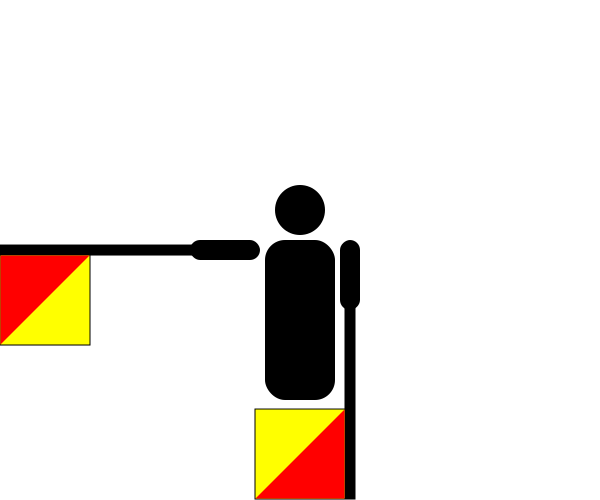
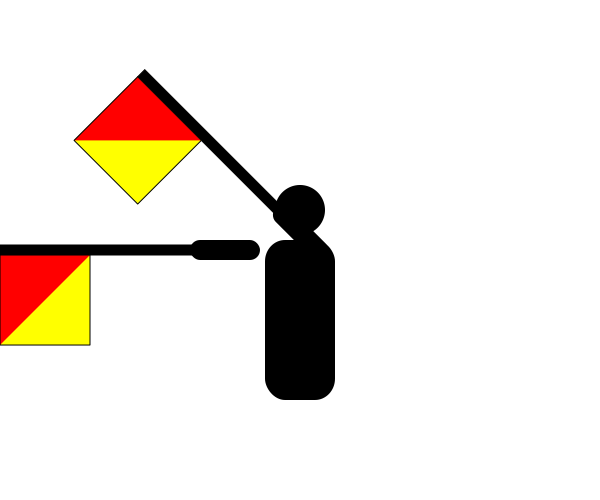
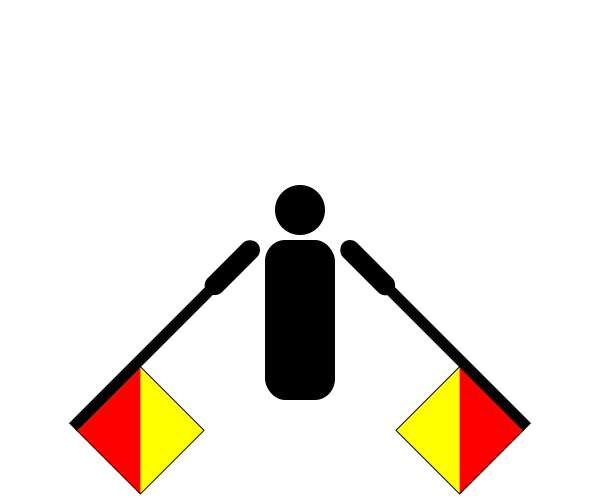
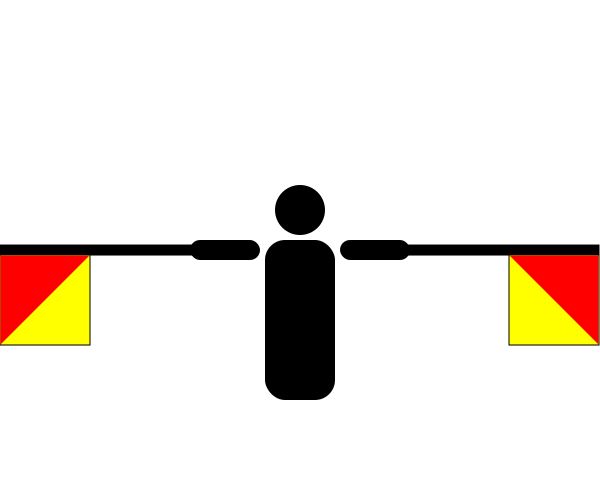
Semaphore

There are approximately 1,437 people named Bonnar in the UK. That makes it roughly the 5,545th most common surname in Britain. Around 22 in a million people in Britain are named Bonnar.

Famous people named Bonnar
- Mark Bonnar - Scottish actor
- John Bonnar - Scottish football player (1924 to 2004)
Names and descriptions courtesy of Wikipedia, and may contain errors. This is not intended to be an exhaustive list of every famous person with this name.