BERNHARDT
Bernhardt is a surname of German origin, predominantly found in German‑speaking regions and among descendant communities worldwide.
It derives from the personal name Bernhard, a compound of the Old German elements bern, meaning “bear”, and hart, meaning “brave”, “strong” or “hardy”. The literal translation is therefore “brave as a bear” or “strong as a bear”.
Historical records indicate that the name was in use in Germany from at least the early medieval period. In the 12th century, it made its first appearance in England, where Hugo Bernard was recorded in the Pipe Rolls of Lincoln in 1130 during the reign of Henry I. Later mentions include Thomas Bernhard of Cambridge (1260), Albertus Berenhardus of Schwenningen (1290) and Gregorius Bernhardt of Chemnitz (1549). These entries confirm that the name had already become hereditary by the early 12th century in England, a period noted for the earliest systematic adoption of such surnames in Europe.
The popularity of the surname in both Germany and England was further encouraged by the veneration of two saints bearing the name: St. Bernard of Clairvaux (c. 1010‑1153), founder of the Cistercian monastic order, and St. Bernard of Menthon (923‑1108), founder of Alpine hospices and patron saint of mountaineers. Their renown imbued the name with a pious and heroic connotation that appealed to contemporary families.
Variations of the surname are extensive, reflecting regional orthographic differences and the process of anglicisation. Common variants include Bernhard, Bernhart, Bernhardi, Bernardt, Bernarde, Bernardo, Bernhardsson and Bernhart. Anglicised forms such as Bernard, Burnett, Barnard and Barnhardt have also emerged, particularly among emigrants whose names were adapted to English spelling conventions.
Within the Jewish diaspora, the surname is commonly adopted by Ashkenazi families who settled in German‑speaking regions. As a result, individuals bearing the name can be found among Israeli populations in addition to German and American communities.
Prominent bearers of the surname include the celebrated French stage actress Sarah Bernhardt, who lived from 1844 to 1923 and brought the name international prominence, and the American philanthropist Michael Bernhard. These figures demonstrate the surname’s reach beyond its Germanic roots into broader cultural contexts.
Globally, the highest concentrations of individuals with the surname Bernhardt remain in Germany, the United States—where the name arrived with waves of German immigration—and Israel. The diaspora also places the name in France, where the fame of Sarah Bernhardt has left a lasting imprint, and in other nations that have received German emigrants over the centuries.
Typical given names associated with the Bernhardt surname
Male
- Andrew
- Carl
- Colin
- Daniel
- Dirk
- Ian
- Mark
- Michael
- Paul
- Peter
- Richard
Female
- Beverly
- Cecile
- Colette
- Diane
- Helen
- Karen
- Kathleen
- Louise
- Michelle
- Rose
- Sarah
- Tina
Similar and related surnames
Related and similar names are generated algorithmically based on the spelling, and may not necessarily share an etymology.
How to communicate the surname Bernhardt in...
Braille
⠃⠑⠗⠝⠓⠁⠗⠙⠞
Morse
-.....-.-......-.-.-..-
Semaphore


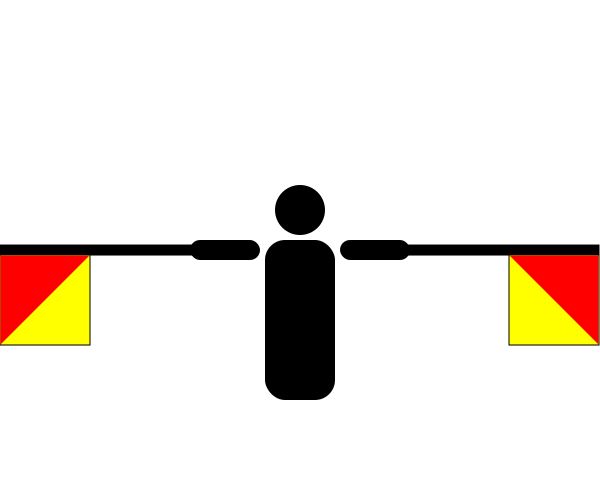
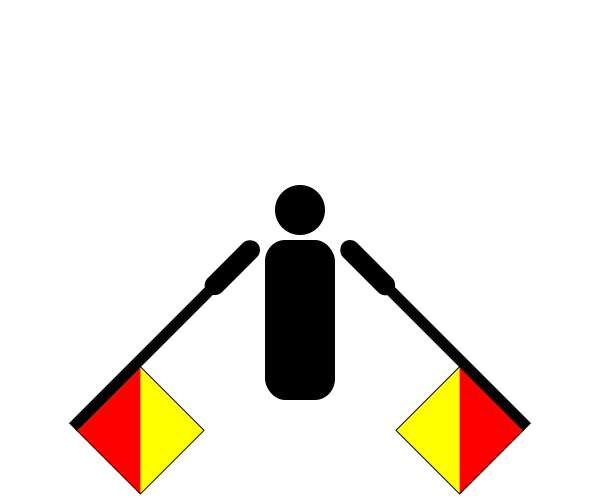


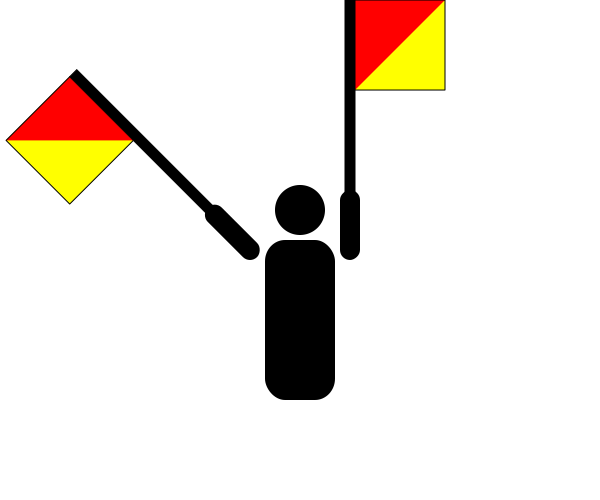
There are approximately 180 people named Bernhardt in the UK. That makes it one of Britain's least common surnames. Only around three in a million people in Britain are named Bernhardt.
Region of origin: Europe
Country of origin: Germany
Language of origin: German