BARTEN
Barten is a surname of multiple European roots, each contributing a distinct etymological layer to its historical identity. The name is first recognised as a patronymic in Dutch usage, where it is derived from the given name Bart, a short form of Bartholomeus—the Dutch version of Bartholomew. In this context the name translates literally to “son of Bart”, a construction common to early Dutch surnames which served for identification in the burgeoning population of the Low Countries.
The personal name Bart itself can be traced back further to the Aramaic Bar‑Talmay, meaning “son of Talmay”. This Aramaic root is preserved in the medieval form of Bartholomew, signifying a lineage that ultimately reflects the linguistic heritage of the first Christians who spread the name across Europe. Consequently, the Dutch patronymic Barten carries the legacy of an Aramaic progenitor, a feature that is maintained in modern genealogical research.
In addition to its Dutch patronymic origin, Barten also appears in Anglo‑Saxon records as a locational or topographical name. Early manuscripts from the 11th and 12th centuries refer to individuals such as Paganus de Barton of Yorkshire (1163) and John de la Berton of Kent (1273). The Anglo‑Saxon derivation is from Old English elements bere (barley) and tun (enclosure, settlement), yielding meanings such as “barley farm” or “farmstead”. Names of places called Barton in Staffordshire, Gloucestershire, Herefordshire, Warwickshire and Lincolnshire, all recorded as “Bertone” in the Domesday Book of 1086, underscore the geographic basis of the surname in medieval England.
Germanic influences also appear in the history of Barten. In German contexts the name may arise from a shortening of Berthold, a compound of beraht (bright) and wald (rule). Apart from its nominal derivation, the surname could also denote origin from a place named Barten, a town that once lay within German territory now part of Poland. Such a toponymic element is typical of surnames established when people migrated and adopted the name of their former home to distinguish themselves in new settlements.
Variants of the surname reflect its geographical spread and linguistic adaptation. Common alternatives include Barton, especially in England where the place‑name form is prevalent; Bartenstein, found in German‑influenced regions referring to the town of Bartenstein; Barstens, a German and Dutch spelling; Bartin, predominantly French; and the French‑related forms Berthen and Bertin. All of these spellings share the root Barten and can be traced back to the same patronymic or locational origins, although some may have independent derivations due to regional linguistic changes.
Distribution of the surname remains strongest in the Netherlands, which retains a concentration of the earliest Dutch bearers. From there the name migrated through the common routes of Dutch diaspora to the United States, Belgium, and Canada, where it remains relatively uncommon. In Germany, the surname is also present, often linked to the Germanic root from Berthold or the geographical association with Barten in former German territory. Modern census data confirm that while Barten is not among the most frequent surnames in any country, it retains a clear presence wherever Dutch, German, or Anglo‑Saxon heritage intersects with contemporary populations.
Typical given names associated with the Barten surname
Male
Female
Similar and related surnames
Related and similar names are generated algorithmically based on the spelling, and may not necessarily share an etymology.
How to communicate the surname Barten in...
Braille
⠃⠁⠗⠞⠑⠝
Morse
-....-.-.-.-.
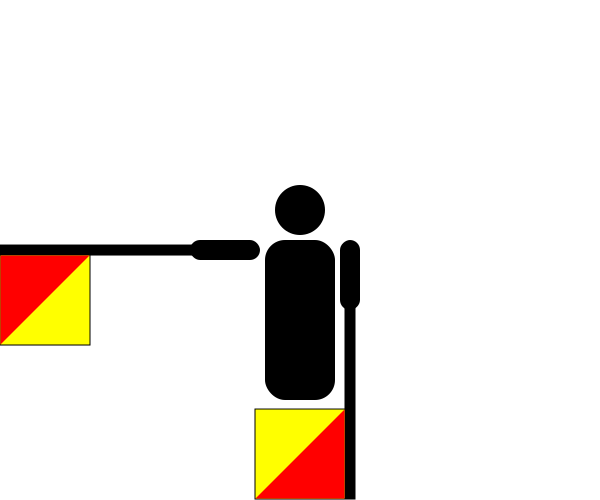
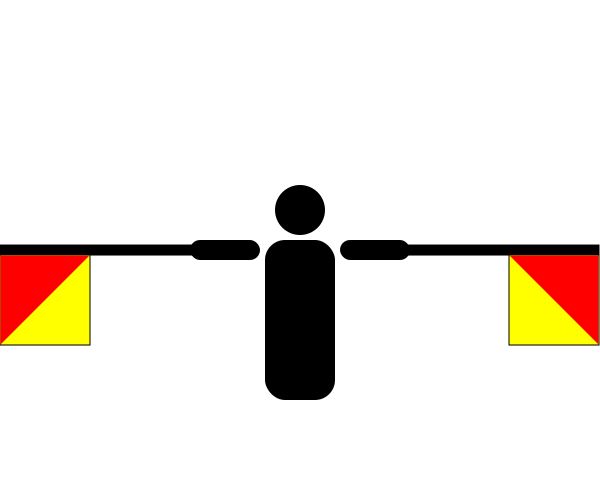
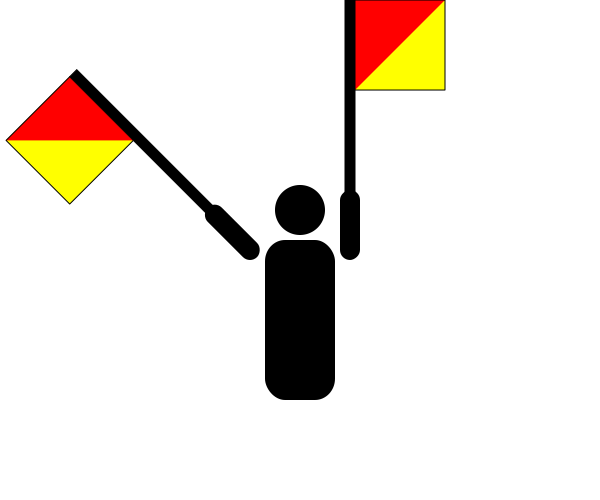
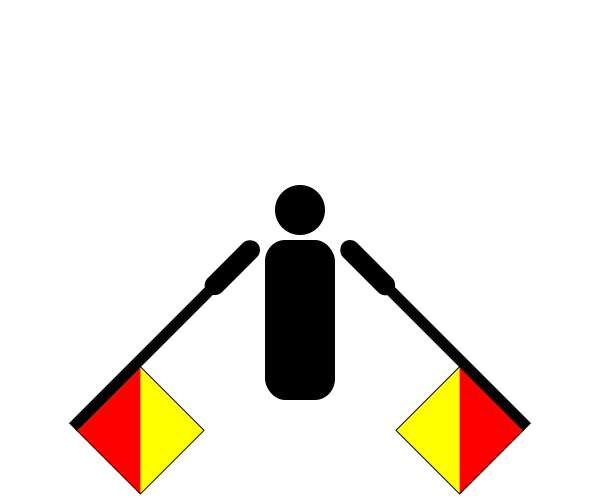
Semaphore


There are approximately 67 people named Barten in the UK. That makes it one of Britain's least common surnames. Only around one in a million people in Britain are named Barten.