MCGINNIS
Recorded variant spellings include Mc Ginnis, Mcginnis
McGinnis is a surname of Celtic origin, rooted in Gaelic traditions of Ireland and Scotland. It is a patronymic name, derived from a personal name of an ancestor and commonly found among families of Irish and Scottish descent.
The surname is the anglicised form of the Gaelic Mac Aonghus, literally meaning “son of Aonghus”. The personal name Aonghus itself combines aon, meaning “one”, with gus, meaning “choice”, “enterprise” or “strength”. Consequently, the name can be interpreted as “unique choice” or “one strength”. The prefix Mac (sometimes rendered Mag before a vowel) identifies the bearer as a descendant of the named ancestor.
Various spellings of the surname exist, reflecting linguistic evolution and regional differences. Common variants include McGuinness, MacGuinness, Magennis and, most recognisable, Guinness. These forms all share the same Gaelic root and relate to the same ancestral line, even though the spelling changes have been influenced by anglicisation and migration.
The earliest documented spelling recorded in the early fifteenth century appears in the mid‑nineteenth‑century publication Early Records of Iveagh as Mag Aonghusa, dated to approximately 1150. The record was made within County Down, then part of the Irish kingdom of Dal Araidhe, during the reign of Turlough Mor O’Connor (1119–1156). In that era the family had already become established territorial lords of Iveagh, with their stronghold situated at Rathfriland.
Aged back to the mid‑fifth century, the family is believed to have descended from a chief of Dal Araidhe. By the twelfth century they were prominent figures in the region, and several members fought alongside Hugh O’Neill at the Battle of the Yellow Ford in 1598, securing a historic victory for the Irish.
The name continued to flourish into the early modern period. In 1759 Arthur Guinness founded the Guinness brewery at Dublin, and the family’s ascendancy brought the name worldwide. The title of Lord Iveagh remains in use, and the contemporary holder is associated with present‑day brewing enterprises that are globally significant.
In the late eighteenth and early nineteenth centuries, economic hardship, political upheaval and the promises of liberty prompted large numbers of people bearing the surname to emigrate to North America, Canada and Australia. As a result, McGinnis and its variants are now found throughout the United States, Canada, Australia, as well as in Northern Ireland and Scotland, in proportion to patterns of settlement.
The surname carries a cultural heritage that extends into contemporary fields such as sport, entertainment and politics. Its ongoing prominence in various spheres reflects the enduring legacy of the ancient Celtic name that it preserves. The name remains a testament to a lineage that began as a signifier of descent from a single ancestor named Aonghus and has evolved into a global family designation across multiple regions and industries.
Typical given names associated with the McGinnis surname
Male
- Brian
- David
- Gary
- James
- John
- Joseph
- Michael
- Patrick
- Peter
- Richard
- Robert
- William
Female
- Anne
- Catherine
- Donna
- Jane
- Laura
- Margaret
- Marie
- Mary
- Nicola
- Sandra
- Sarah
- Susan
Similar and related surnames
Related and similar names are generated algorithmically based on the spelling, and may not necessarily share an etymology.
How to communicate the surname McGinnis in...
Braille
⠍⠉⠛⠊⠝⠝⠊⠎
Morse
---.-.--...-.-......
Semaphore
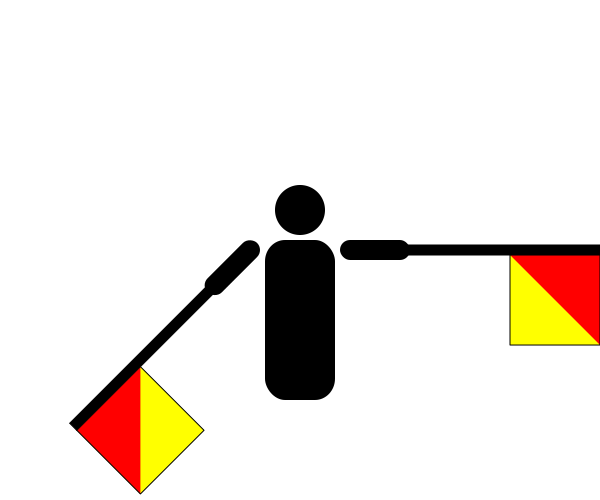


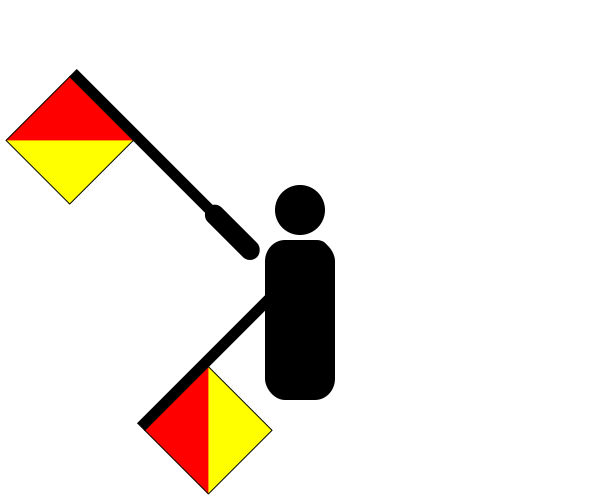
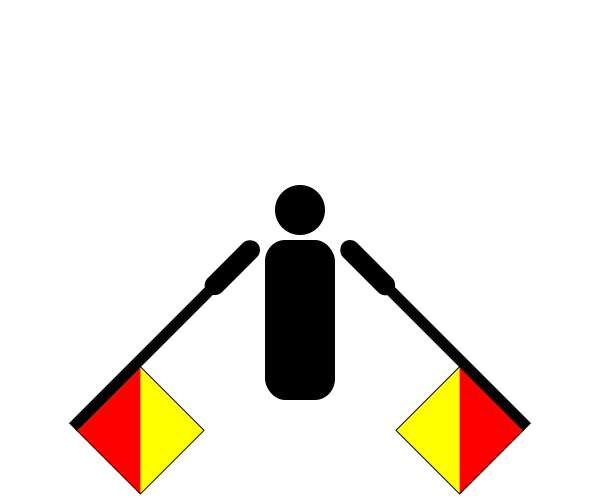

There are approximately 541 people named McGinnis in the UK. That makes it one of Britain's least common surnames. Only around eight in a million people in Britain are named McGinnis.
Surname type: From name of parent
Origin: Celtic
Region of origin: British Isles
Country of origin: Ireland
Religion of origin: Christian
Language of origin: Gaelic
